Outstaffing vs Outsourcing: Who Controls the Work

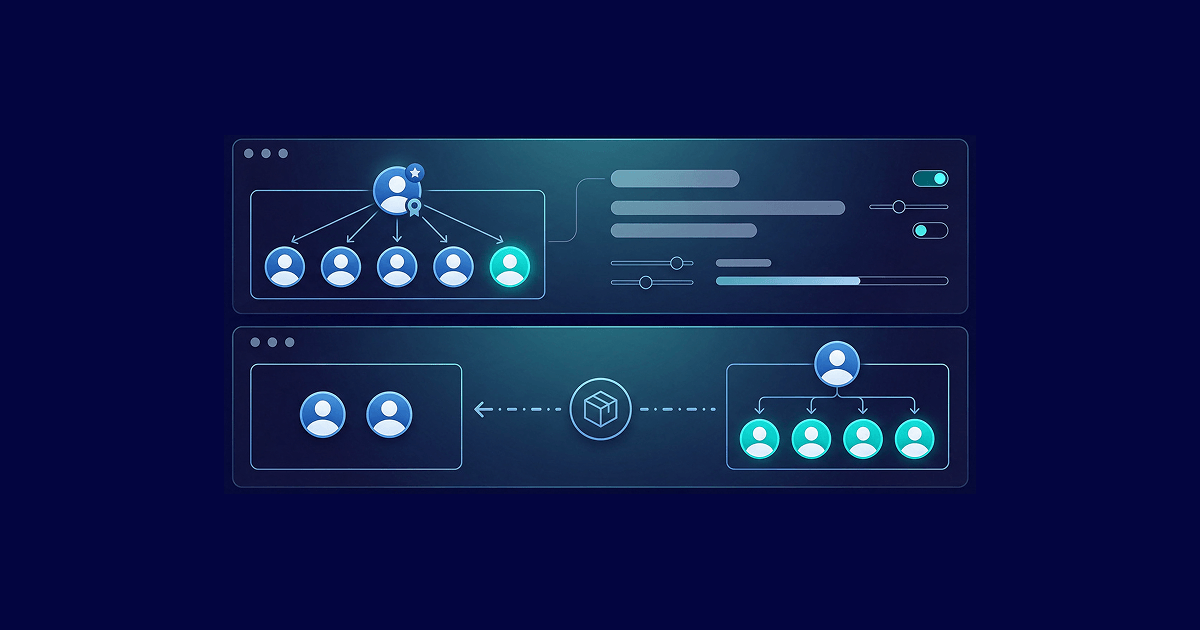
Outstaffing vs outsourcing is a choice about who directs the engineers. Outstaffing is a hiring model in which a provider employs engineers who work full time inside your team, under your direction.
Outsourcing is handing a project or function to a vendor that staffs it, manages it and answers for the result. US providers usually sell outstaffing as nearshore staff augmentation.
Below, we compare both on control, cost and AI work, run the cost of one senior engineer for a year, and close with four questions that settle the choice. If you are scoping AI work, the AI section is the place to start.
Outstaffing vs outsourcing at a glance
Outstaffing gives you engineers and keeps delivery in your hands; outsourcing gives you a delivered result and keeps the engineers in the vendor's hands. The cards show where each model lands on control, pricing and risk, with the honest case for and against both.
Outstaffing vs outsourcing
Outsourcing, though, can sit in any time zone. Nearshore software outsourcing puts the vendor in hours close to yours, which makes communication easier, while ownership of the team and the delivery stays with the vendor.
Outsourcing vs outstaffing: who controls the team
With outstaffing, you control the team: you set priorities, run the standups, review the code and decide who stays. With outsourcing, the vendor controls the team and you control the contract: scope, deadlines and acceptance criteria. The table shows who decides what in each model.
Who decides what: outstaffing vs outsourcing
That split decides how a change travels. In an outstaffed team, a new priority reaches the engineer at the next standup. In an outsourced project, it goes through the vendor's project manager and, under a fixed-price contract, through a change request with its own price.
Still, time-and-materials and dedicated-team contracts soften this: you can redirect the work without renegotiating, and some vendors let you interview the engineers.
Even then, the vendor's manager runs the team day to day and decides who stays on it, which is the line between the two models.
Control also decides where the knowledge ends up. Outstaffed engineers learn your codebase as members of your team, and that context stays with you. An outsourced team builds its context inside the vendor, and handing it back is a project of its own.
Direct hires and independent contractors sit at the two ends of the same choice, and the difference between staff augmentation, outsourcing and direct-hire contracting comes down to who employs the person and who directs the work.
What outsourcing and outstaffing really cost
Per senior engineer-hour, the two models now cost about the same. In Accelerance's 2027 survey of outsourcing providers, a senior developer bills a median of $58 an hour in Latin America and $60 worldwide.
Tecla's senior average is also $58 an hour, and it includes EOR employment, compliance and a 90-day replacement guarantee.
Offshore outsourcing moves the rate by region: the senior median is $35 in South and Southeast Asia and $65 in Eastern Europe, above Latin America.
The difference is what the price buys. An outsourced team carries the vendor's project manager. Assume one full-time manager for four engineers: at the Latin American medians, the team bills $282 an hour against $232 outstaffed, about $104,000 a year for the management layer.
That layer earns its price when no one on your side can lead engineers. When you already have a lead, it pays for direction your team gives anyway.
The outsourced quote also leaves part of the bill on your side.
A 2008 study in MIS Quarterly of software projects outsourced to vendors in India found that clients took on extra work no contract priced: writing detailed requirements, transferring knowledge and coordinating the vendor.
Those extra costs ran highest on projects that depended on knowledge of the client's own systems, which is what product work runs on.
Outstaffing, though, has its own bill. You lead the engineers, onboard them into your codebase and absorb the lost weeks of a hire who does not work out. Without a technical lead to direct them, outstaffed engineers cost money and ship little.
The math: one senior engineer for a year
One senior engineer for a year costs about $251,100 in-house in the US, about $124,800 at an outsourcing firm's global median rate and about $120,640 outstaffed at Tecla's average, all on 2,080 hours.
One senior engineer for a year: what each option costs
US hire: national 75th percentile wage with benefits at 31.5% of employer compensation. Outsourcing and offshore firms: self-reported provider medians, before any project manager. Tecla average includes EOR employment, compliance and the 90-day replacement guarantee.
Sources: BLS wages, BLS benefits, Accelerance, 2027, Tecla average.
The in-house figure starts from the national 75th-percentile wage for software developers, $171,980 a year (BLS wage statistics, May 2025), loaded with benefits at 31.5% of compensation.
Two assumptions sit under the math: every row is a senior engineer, and every row counts 2,080 paid hours. Tecla's $58 is an average across countries, so a specific hire can land above or below it.
The comparison leaves out what both sides share, such as the hours your lead spends directing the engineer. It also leaves out the cost of an in-house search, which runs a median of 75 days for a technical role.
Outsourcing vs outstaffing for AI development
For AI development, outstaffing is the stronger model, because AI work changes as you learn from your own data and needs someone on your side making calls every day. A scope written before the first evaluation run is hard to hold once results come in.
The difficulty is structural. Google engineers writing in a NeurIPS 2015 paper found that machine learning systems resist strict boundaries: their behavior depends on data, configuration and changes in the outside world, which makes intended behavior hard to specify up front.
Fixed boundaries are what a fixed-scope outsourcing contract runs on. A statement of work pins down inputs and acceptance criteria, while an AI feature keeps moving them as prompts, evaluations and data shift.
As a result, each move becomes a negotiation, and iteration slows to the pace of the contract.
Meanwhile, code drafted with an assistant needs review by someone who knows your system and answers to your standards. In an outstaffed team, you run that review. In an outsourced project, it happens inside the vendor, and you see the result at acceptance.
That review is now the constraint: by September 2026, more than 40% of pull requests on GitHub started with an agent's draft (GitHub Octoverse 2026).
Outsourcing vs outstaffing: which to choose
Choose outstaffing when the work is ongoing, changes often and you have a technical lead to direct it: product development, platform work and AI features. Choose outsourcing when the scope is defined, the result can be accepted against a spec, and no one in-house can manage engineers.
Even so, outsourcing wins on a one-off build with stable requirements: a marketing site, a migration with a fixed end state, or a prototype to test an idea before you hire. It also wins when your company has no engineering leadership yet, because the vendor supplies it.
When the work will outlast the project and you can lead it, a nearshore development team you direct keeps the code, the context and the engineers with your company.
Four questions settle most cases:
- Will the scope hold for the length of the contract? A stable scope can be outsourced; a moving one needs a team you direct.
- Who on your side will lead the engineers? Without a technical lead, outsourcing buys you the management you lack.
- Does the knowledge need to stay in your company? If the system is core to your product, outstaff and keep the context.
- Is this AI or product work that changes with every release? Then daily control is worth more than a fixed price.
In practice, some teams run both: outstaffed engineers on the core product and an outsourced vendor on a scoped side project, with one owner on your side for each.
How Tecla fits the outstaffing side
Tecla works on the outstaffing side: we place vetted engineers from 18+ Latin American countries into US teams, and you direct their work in your time zone, in real time.
Each engineer is employed under our EOR, which handles payroll, benefits and compliance, and integrates into your team as an in-house member. Fewer than 1% of applicants pass our 4-layer vetting, which ends with an AI-fluency screen.
Weighing outstaffing for your own roadmap? Build your team with Tecla: a vetted shortlist of engineers arrives in as soon as 3 days.
Frequently asked questions
What is the difference between outstaffing and outsourcing?
Outstaffing adds engineers to your team under your direction, while a provider employs them. Outsourcing hands a project to a vendor that staffs it, manages it and delivers the result. In outstaffing you control the daily work and carry the delivery; in outsourcing the vendor does both, and you control the contract.
Outsourcing vs outstaffing: which gives more team control?
Outstaffing gives you more control. You set priorities, run the standups, review the code and approve every engineer who joins. With outsourcing, the vendor directs the team and you control scope, deadlines and acceptance, so changes travel through the vendor's project manager and often a change request.
Is outstaffing cheaper than outsourcing?
Per engineer-hour, about the same: outsourcing firms bill a median of $60 an hour for a senior worldwide and $58 in Latin America, and Tecla's senior average is $58, all-inclusive with EOR. Outsourcing usually adds the vendor's project manager on top, so weigh that layer against the time your own lead would spend.
When should I choose outstaffing, and when outsourcing?
Choose outstaffing for ongoing product, platform or AI work led by your own technical lead. Choose outsourcing for a defined project with stable requirements, such as a migration with a fixed end state, or when no one in-house can manage engineers. If the scope will move during the contract, outstaffing fits better.
Which fits AI and software development work better, outsourcing or outstaffing?
Outstaffing, for work that keeps evolving. AI features change as prompts, evaluations and data shift, and a fixed outsourcing scope turns each change into a negotiation. Outstaffed engineers take new priorities at the next standup, and your team reviews their code. Outsourcing still works for a scoped prototype with clear acceptance criteria.
Is outstaffing the same as staff augmentation?
Yes, in practice. Outstaffing is the term common among Eastern European vendors, and staff augmentation is what US providers call the same model: engineers employed by a provider who work inside your team, on your backlog and under your direction. Compare the contract terms, since the label alone says little.
Can I combine outstaffing and outsourcing?
Yes, and many companies do. A common split puts outstaffed engineers on the core product, where daily control matters, and an outsourced vendor on a scoped side project with fixed deliverables. Give each one a clear owner on your side, so priorities do not collide between the two.
Who employs outstaffed engineers?
The provider does, as their employer of record, handling payroll, benefits and compliance in the engineer's country. You direct the work without setting up a legal entity abroad. At Tecla, each engineer is employed under our EOR and works on your hours as an in-house member of your team.
How does Tecla vet engineers?
Every candidate goes through four layers: AI screening, a recruiter interview for communication and English, an engineer-to-engineer technical assessment, and an AI-fluency screen. Fewer than 1% are accepted, so the engineers who reach your shortlist have already shown how they write code and reason about architecture.
What does Tecla's rate include?
One all-inclusive hourly rate per professional, covering vetting, EOR and compliance, equipment and benefits management, ongoing success support, and a 90-day replacement guarantee. There are no hidden fees, and you pay only after you hire. Savings run up to 60% against equivalent US talent.
How fast can Tecla send candidates?
A shortlist of vetted candidates arrives in as soon as 3 days, because the network is vetted ahead of the role. A full-cycle hire, from the first call to a signed engineer, can take as little as 3 weeks, depending on the role and how fast your team interviews.
Where are Tecla's engineers based?
Across 18+ Latin American countries, from a network of 50,000+ vetted professionals. They work in your US time zone, so standups, code reviews and releases happen live with your team. Every placement is backed by a 90-day replacement guarantee, and 98% of placed talent is still with the client one year after starting.
Sources
- Accelerance, 2027 Global Software Engineering Rates & Trends Guide (provider survey)
- MIS Quarterly, client extra costs in software projects offshored to India, 2008
- BLS, Occupational Employment and Wages: Software Developers, May 2025
- BLS, Employer Costs for Employee Compensation, June 2026
- Ashby, Recruiting Operations Benchmarks, 2026 Talent Trends Report
- Sculley et al., Hidden Technical Debt in Machine Learning Systems, NeurIPS 2015
- GitHub, Octoverse 2026
Last updated November 19, 2026. Tecla figures reflect current engagement terms.