.png)
70% of hiring managers say AI helps them make faster, better hiring decisions. Only 8% of job seekers think AI makes hiring more fair.
That's according to Greenhouse's 2025 AI in Hiring Report, based on a survey of more than 4,100 job seekers, recruiters, and hiring managers.
Neither side is wrong. Recruiters are genuinely drowning in AI-generated applications, and candidates are genuinely being filtered by systems they can't see into, which is exactly the tension agentic AI in recruitment is now built to sit inside.
This guide covers agentic AI in recruiting specifically, building on the screening workflow already outlined in Tecla's Agentic AI in HR guide: how sourcing and screening actually work, and where the law already requires a human.
What Is Agentic AI for Recruiting?
Agentic AI for recruiting is a system that sources candidates, engages them with outreach, and screens applications against a role's actual requirements, rather than matching keywords against a job description.
A traditional applicant tracking system filters resumes on exact terms: five years of a specific tool, a specific degree.
Agentic AI reads what a candidate actually did and reasons about whether that experience transfers, the way a recruiter reading a resume closely would.
Neither approach removes the recruiter from the process. It changes whether they spend their day reading a thousand resumes or reviewing the thirty that survived reasoning, not just keyword matching.
From Keyword Filters to Agentic Sourcing
Recruiting automated the way most functions did: keyword filters first, then RPA bots handling scheduling and status updates between the ATS and email.
That filtering approach has a real cost. Candidates learned to stuff resumes with keywords to beat the filter, and the filter got worse at actually distinguishing qualified candidates from ones who'd gamed it.
Agentic sourcing works differently. It searches beyond a candidate database for people who match a role's actual requirements, drafts personalized outreach instead of a template, and reasons through a resume's substance rather than its keyword density.
Most production recruiting stacks in 2026 still run structured filtering as a first pass. Agentic reasoning runs on top of it, expanding the pool and re-ranking what the filter would have missed or over-ranked.
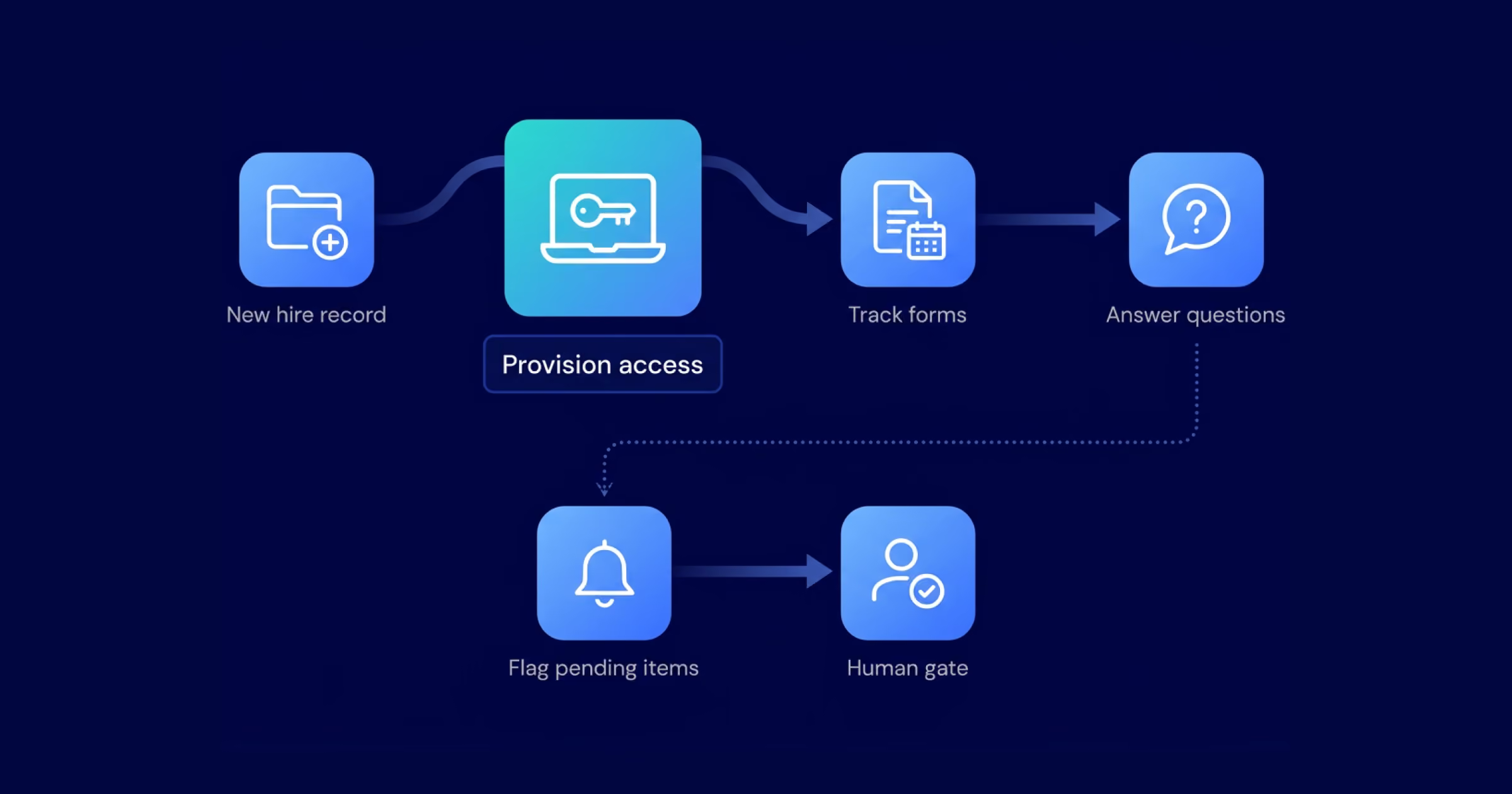
The Sourcing and Screening Workflow, Step by Step
The workflow below covers the coarse shape. The sections after it go deeper into sourcing mechanics, the trust problem neither side has solved, and where audits are already legally required.
Sourcing and Outreach at Scale
Sourcing used to mean a recruiter manually searching a handful of databases and sending the same templated message to everyone who looked plausible.
An agent can search a much wider pool, personalize outreach to what actually matters to a specific candidate, and follow up without the recruiter tracking every thread manually.
The volume of outreach isn't the point. Reaching qualified candidates a manual search would have missed is.
Screening and Ranking Candidates
A resume is a partial, self-selected account of someone's experience, which is exactly why screening well requires reading it, not just scanning it for terms.
Agentic screening reasons about whether a candidate's actual experience, not just their job titles, matches what the role needs, and produces a ranking with a stated reason instead of an opaque score.
That reason is what a recruiter reviews before deciding anything.
The Trust Problem Neither Side Has Solved
Greenhouse's research found 74% of US job seekers now personally use AI in their job search, while 87% say employer transparency about AI use is important and mostly absent.
The same report found 46% of job seekers say their trust in hiring has dropped over the past year, and 42% of those blame AI directly. Recruiters report the same erosion from the other side: candidates using AI to fabricate experience or game screening tools.
This isn't a problem better model accuracy fixes on its own. It's a transparency problem: telling candidates when AI is involved, and giving recruiters a ranking they can actually explain, not just trust.
Where the Law Already Requires a Human
NYC Local Law 144 requires an independent bias audit for any tool that substantially assists a hiring decision, with penalties from $500 to $1,500 per violation, enforced since July 2023.
The EU AI Act classifies employment AI, including CV screening and interview evaluation, as high-risk.
Its Annex III compliance deadline was originally set for August 2, 2026, but a 2026 revision postponed that specific deadline to December 2, 2027, while related transparency obligations still take effect on the original date.
Illinois' amended Human Rights Act, effective January 2026, separately prohibits using AI in ways that produce discriminatory hiring outcomes, regardless of intent.
The Recruiter's Role
The recruiter's job shifts from reading a thousand resumes to reviewing the shortlist an agent already reasoned through, checking the ranking makes sense, and doing the parts that stay fundamentally human: the interview, the culture read, the offer conversation.
Implementation: Guardrails Specific to Recruiting
Every guardrail below exists because a hiring decision is one of the few agentic use cases where the law, not just good practice, requires a human and an audit trail.
Rolling This Out: What to Expect
Start with sourcing and outreach for a single requisition, not the full recruiting funnel at once. It's the lowest-risk entry point because it expands the pool rather than narrowing it.
Run any new screening logic alongside manual review for at least one full hiring cycle, comparing who the agent ranked highly against who the recruiter would have advanced anyway.
Document the bias testing before the tool touches a live requisition in a jurisdiction that requires it. That documentation is the actual deliverable an audit or a plaintiff's attorney will ask to see, not the model's accuracy on paper.
The Team Behind Production Agentic AI
The hard part of agentic recruiting isn't sourcing more candidates. It's proving, on request, exactly why the system ranked one candidate above another.
Tecla's Agentic AI services design, build, and operate this workflow directly, the same sourcing, screening, and audit documentation above, running in your stack with the evals and guardrails production requires.
Or bring the expertise in-house: AI engineers who've worked on live recruiting systems, past the demo stage.
Tecla runs a network of senior engineers across the US and Latin America, built over more than a decade, with a top 3% acceptance rate and first candidates in 3 to 5 business days.
FAQ


%20(1).avif)
.avif)
.avif)