The usual reason for leaving Upwork is the fee, and the fee is rarely the largest number in the decision.
Two costs sit above it: the hours your engineers spend screening proposals, and the classification risk that stays with you while the developer is a contractor. A cheaper marketplace leaves both where they were.
The ten below are compared on vetting, what they charge and how that charge is structured, who legally employs the developer, and what recourse exists when a match fails. Figures come from published materials where they exist and independent comparisons where they do not.
Top 10 Upwork Alternatives for Hiring Developers
#1 Tecla
Tecla has been placing remote software engineers with US companies since 2013, from a network of 50,000+ vetted professionals across the US and 18+ Latin American countries. Every candidate passes an AI-fluency screen alongside a live technical assessment.
No proposals to sift is the first difference: candidates reach an interview within 5 days of the intake call, already through a live technical assessment and an AI-fluency screen.
Employment handled by default puts the engineer under Tecla's EOR in their own country, so classification, payroll, and local labour law never reach the client.
One scoped fee replaces a percentage on every invoice, confirmed before any commitment, so the number does not move with contract volume or platform policy.
A 90-day replacement guarantee sits in the engagement agreement, confirmed before signing. It is rarely called on: 97% of placements succeed and 96% of the talent stays.
Our verdict: swapping one marketplace for another changes the fee and leaves the work. Twelve years of placing remote engineers went into removing the screening and the employment question at the same time.
#2 Toptal
Toptal is an invite-only vetted marketplace accepting fewer than 3% of applicants through English assessment, technical interview, and a live project test, with commission undisclosed.
No bidding and real screening is the genuine upgrade over an open marketplace: multi-stage vetting, direct matching, and a 24-hour shortlist.
An undisclosed commission sits inside every hour, estimated by independent analyses at 30% to 60% above the engineer's take-home, alongside a $500 deposit and a $79 monthly platform fee.
Our verdict: for a well-funded team the screening justifies the rate. What you cannot do is model the total, because the margin is never broken out.
#3 Lemon.io

Lemon.io screens developers through four human stages at roughly a 1.2% acceptance rate, rejecting anyone with under five years in the required stack, and publishes its rate tiers.
Published tiers and human screening are the advantages: four vetting stages run by senior engineers, no AI screen, matches inside 24 to 48 hours, Trustpilot at 4.8.
A 160-hour minimum is the constraint buyers meet late. That is a full month at full-time pace before any work begins, which rules out the small first project Upwork is usually used for.
Our verdict: on vetting and rate transparency this is one of the strongest swaps available. The commitment floor is what decides it.
#4 Arc.dev
Arc.dev is an AI-matched marketplace advertising the top 2% of remote developers from a pool of 450,000+, charging a 20% fee on full-time conversions.
Instant matching at a lower rate is the draw: contract rates of $60 to $110 an hour and a $300 refundable deposit against the first invoice.
AI screening at the senior end is the documented weakness, with independent reviews describing shortlists that miss nuance on senior evaluations and turn generic on narrow stacks.
Our verdict: for mid-level work this is faster and cheaper than sifting Upwork proposals. Senior hiring is where the automated shortlist hands the evaluation back to you.
#5 Turing
Turing matches developers using AI from a pool of 3M+ across 150+ countries, paying them as independent contractors through Deel.
Pool size and speed are the strengths, with candidates surfacing in 3 to 5 days from a network no specialist firm matches.
An unverifiable margin is the cost: no published rate card, and independent reviews estimating 50% to 55% of each invoice retained, a figure Turing has not confirmed.
Our verdict: the bench is enormous and the matching works. Judging value is harder when the margin is undisclosed and exclusive assignment is not standard.
#6 Gun.io
Gun.io screens for a minimum of five years of experience, handles contracts, payroll billing, and tax compliance on the talent side, and shows client rates in full before an engagement starts.
Rates displayed in full is the direct answer to the complaint that drives most Upwork comparisons: no deposit, no subscription, and full-time placements at 20% of first-year salary.
A premium floor comes with it, since the network is built around engineers with a decade or more of experience and longer contracts.
Our verdict: the transparency is the product here, and it fixes exactly what an opaque marketplace fee obscures. Budget is the gate.
#7 Revelo
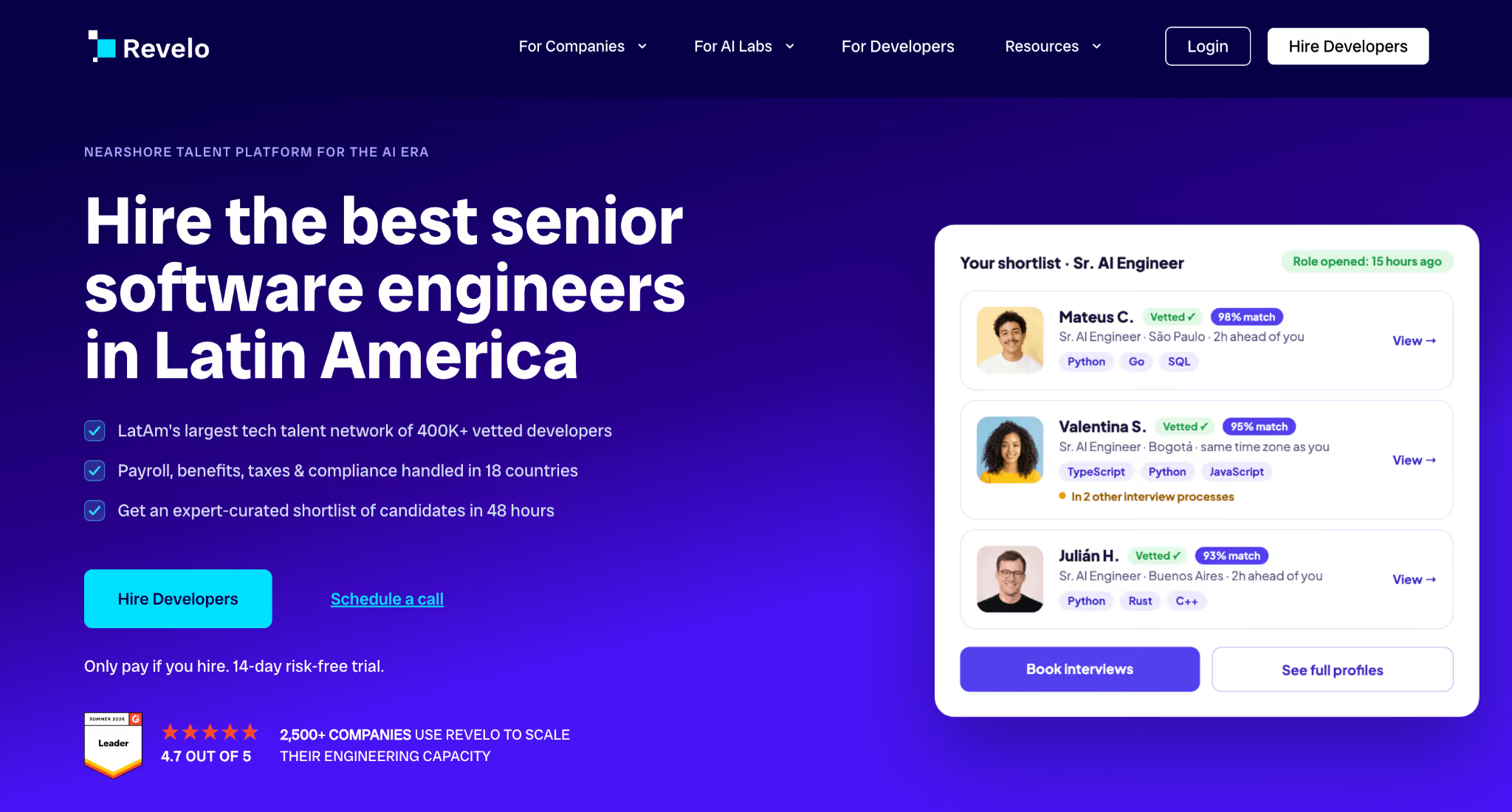
Revelo is the largest Latin American developer marketplace, advertising 400,000+ vetted engineers across 18 countries with an Employer of Record underneath the placement.
Scale with published pricing is uncommon here, alongside shortlists within roughly 72 hours and an average time to hire around 14 days.
A placement relationship is where it ends. The model matches and employs engineers, so a later need for interim technical leadership starts a new vendor search.
Our verdict: on scale and transparency this is a strong regional swap. Engagement range is the boundary to check against the next twelve months.
#8 Fiverr
Fiverr organises work as fixed-price deliverables, charging buyers a 5.5% service fee plus a small fixed order fee on smaller orders, with a vetted Fiverr Pro tier above the open marketplace.
Fixed-price deliverables suit a well-specified build, and the buyer fee is published at 5.5% rather than folded into a rate.
Poorly suited to sustained work is the platform's own boundary. Freelancers pay a flat 20% commission with no volume discount, which pushes quoted rates up on longer engagements.
Our verdict: for a bounded artifact with a written spec this is cheaper and simpler than Upwork. Sustained engineering is the wrong shape for it.
#9 Contra
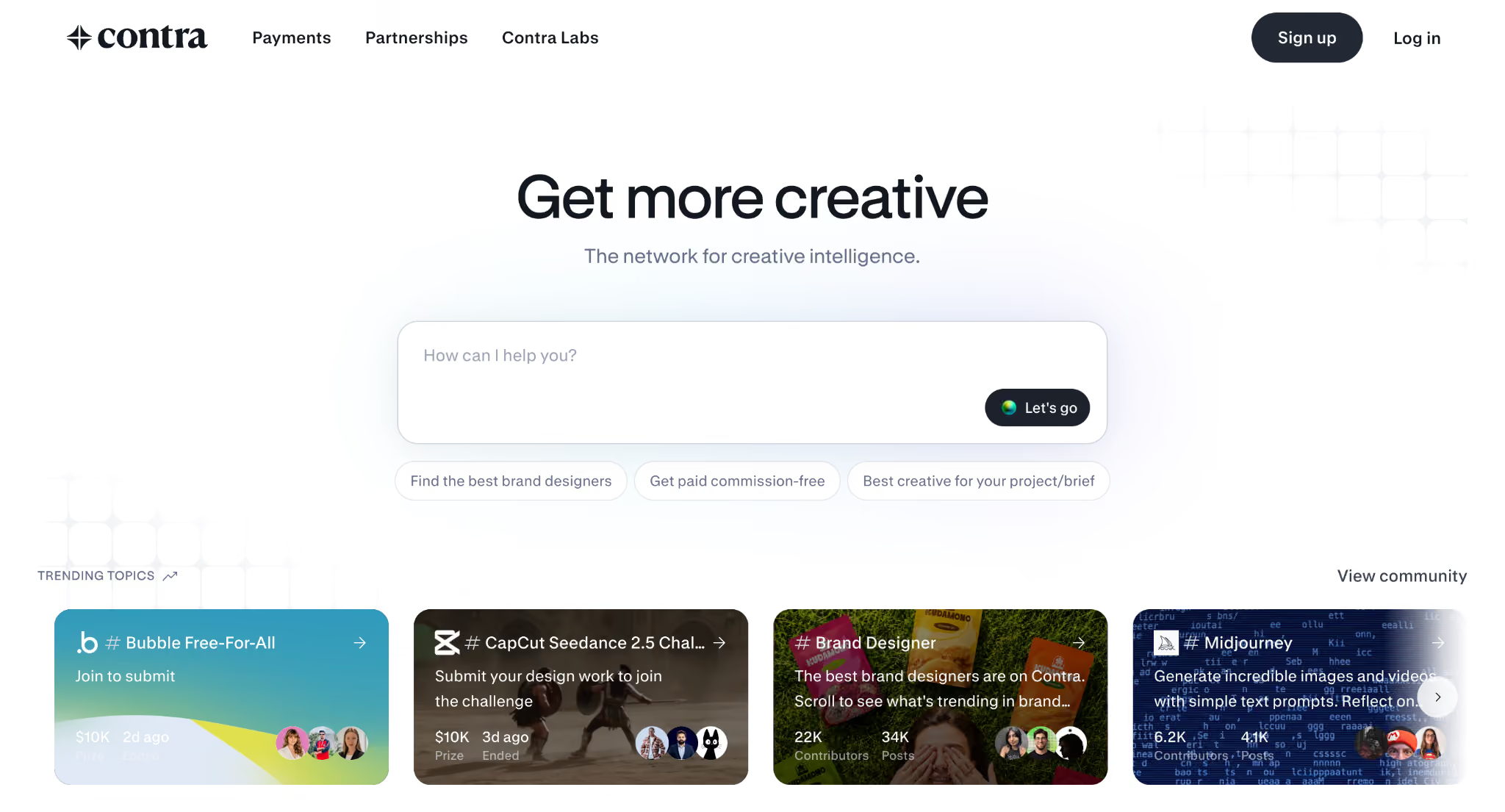
Contra runs a commission-free model, charging $29 per contract instead of a percentage, with portfolio-first discovery and no proposal credits to buy.
A flat fee instead of a percentage is the structural difference: $29 per contract, which works out cheaper than a percentage on anything above roughly $250, and no credits to buy for proposals.
No vetting at all is the tradeoff, and the discovery model is portfolio-first, so evaluating technical depth from a portfolio is entirely your work.
Our verdict: on fee structure this is the cleanest escape from percentage-based marketplaces. What it does not touch is the screening, which is where most of the real cost sits.
#10 Wellfound
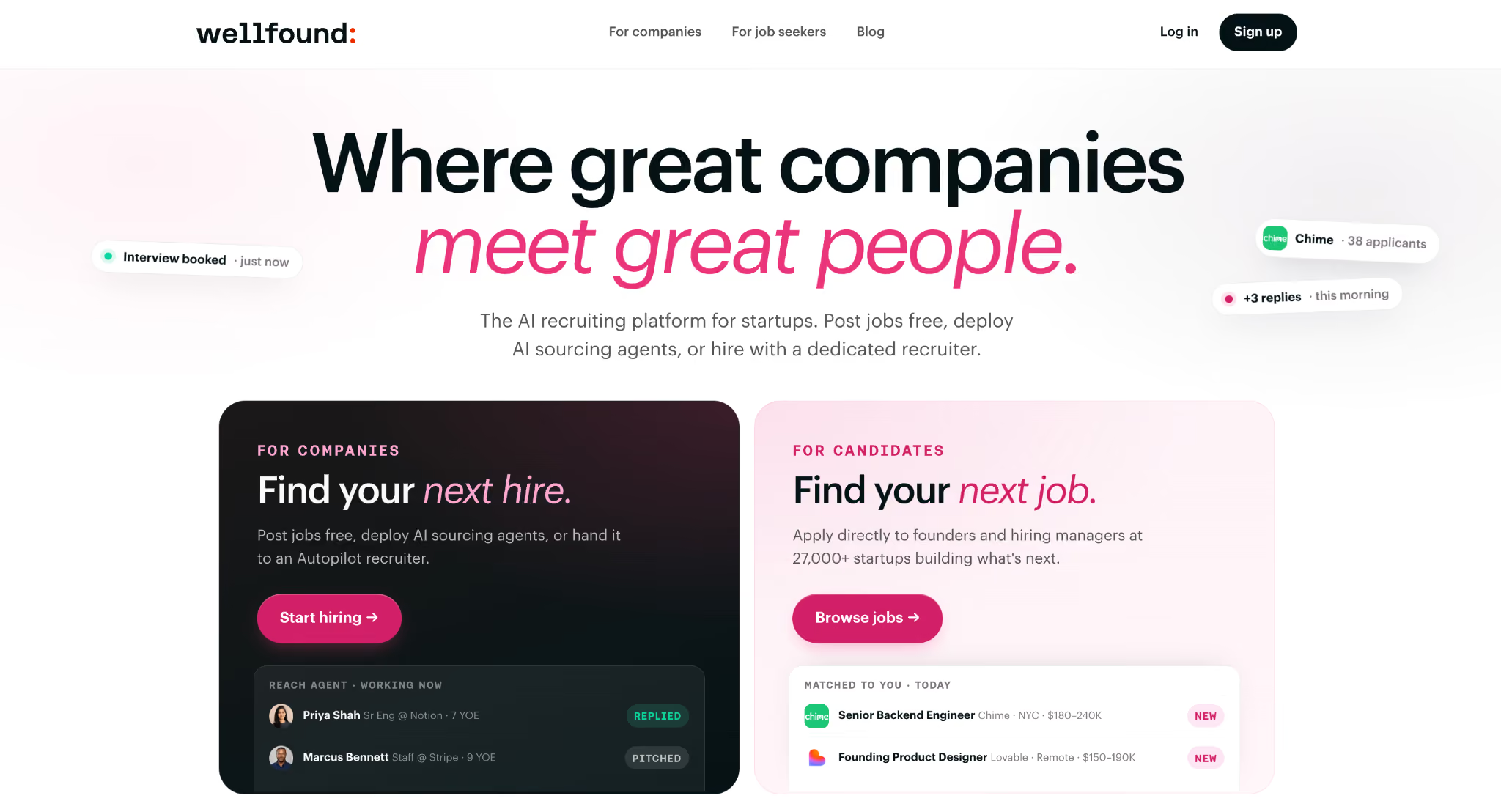
Wellfound combines AI sourcing, applicant review, and a free ATS aimed at startups, with plans from $115 and no per-hire commission on direct sourcing.
No per-hire commission is the advantage over any percentage marketplace, with plans from $115 and a free ATS included.
Software, not a partner is what the entry tier is, and the pool skews toward candidates seeking full-time roles at early-stage companies rather than contractors.
Our verdict: for a permanent startup hire this removes the marketplace fee entirely. Contract and project work sits outside what it is built for.
What We'd Do
A fee comparison is the easiest part of this decision and the least useful. Every option here moves the percentage somewhere: a flat contract charge, a published tier, an undisclosed margin. None of it changes the hours your team spends judging whether a candidate can do the work.
Contra and Wellfound take the fee close to zero and hand the screening back. Toptal, Lemon.io, and Gun.io charge a margin to do it properly. Across all five, and across Upwork itself, the developer stays a contractor and the risk stays with the client.
Tecla has spent twelve years on the version where both parts are handled: the screening finished before the interview, and the engineer employed under EOR from the first day.
Frequently Asked Questions





%20(1).avif)