
Toptal built its name on selectivity, accepting fewer than 3% of applicants and putting a senior freelancer in front of a client within a day. For a defined project that works. The questions arrive later, around cost and who ends up employing the engineer.
The eleven alternatives below answer those questions differently. Some charge less for comparable vetting, some show what sits inside the rate, and some employ the engineer outright.
Each one is compared on the same five points: how it vets, how it prices, who legally employs the engineer, what it asks as a minimum commitment, and what recourse exists when a match fails.
Rates and terms come from each platform's published materials where they exist, and from independent pricing analyses where they do not.
Top 11 Toptal Alternatives
#1 Tecla
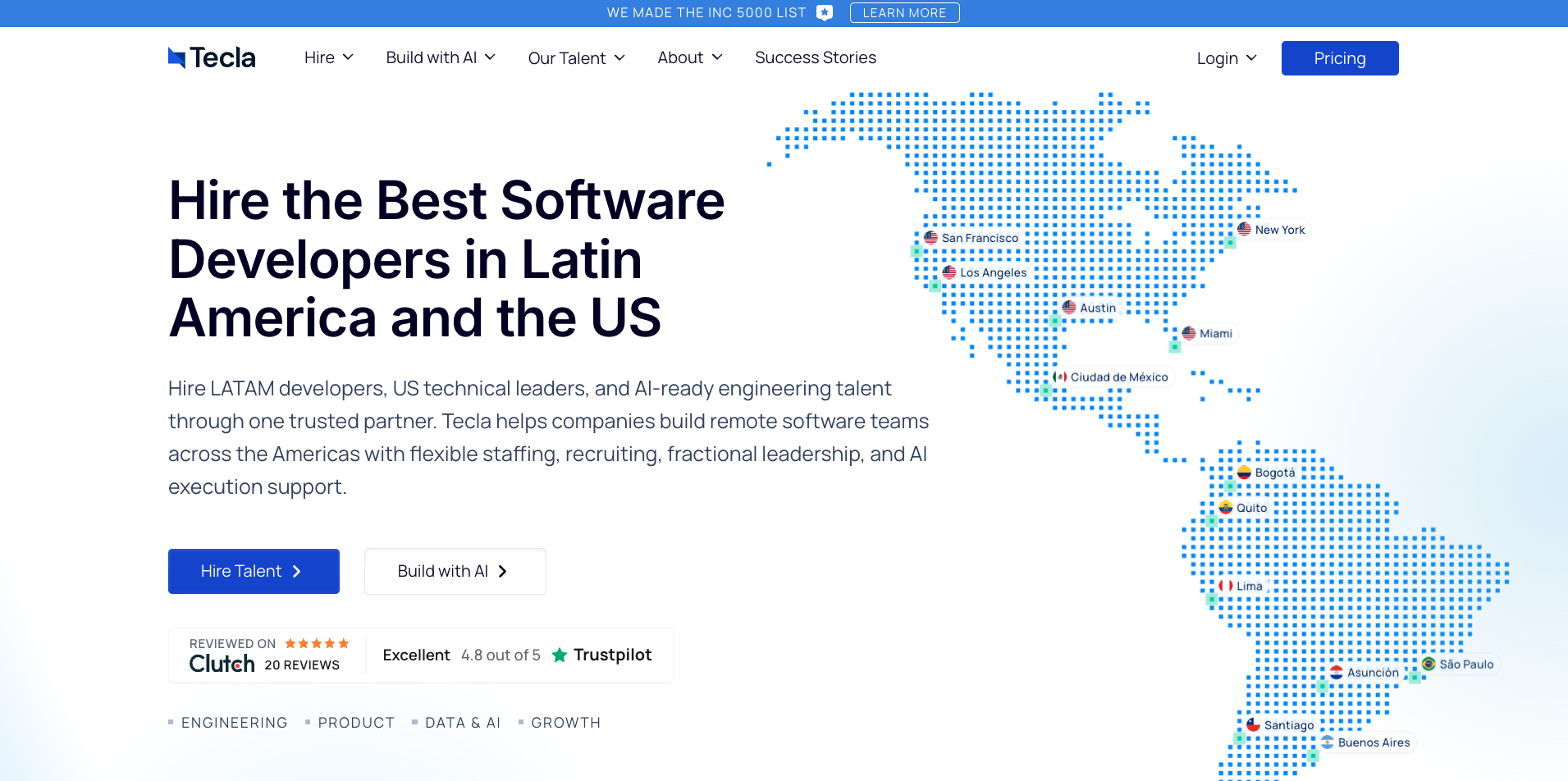
Tecla is an AI-first technical talent partner across the US and Latin America, founded in 2013. Every candidate is screened for AI fluency alongside the technical assessment, and compliance, payroll, and employment law sit with Tecla in all 18+ countries it covers.
AI-fluency screening runs on every candidate at every tier, alongside a live technical assessment. It tests how an engineer reasons with these tools in hand, on architecture calls and on what to automate, which is a different question from whether a platform used AI to find them.
Employment handled by default means the engineer is properly employed in their own country under Tecla's EOR, so classification and payroll never land on the client. Candidates reach an interview within 5 days of the intake call.
AI work beyond the hire sits in the same relationship. Where the need is a system instead of a seat, Tecla scopes agentic and generative AI builds white-label on the client's own infrastructure, and staffs a fractional Chief AI Officer when the function needs direction first.
A 90-day replacement guarantee sits in the engagement agreement, confirmed before signing. It is rarely called on: 97% of placements succeed and 96% of the talent stays.
Our verdict: for a company past its first contractor, the structural questions are who employs the engineer and where the engagement can go next. Tecla answers both in one relationship, across scoped projects and permanent seats alike.
#2 Turing
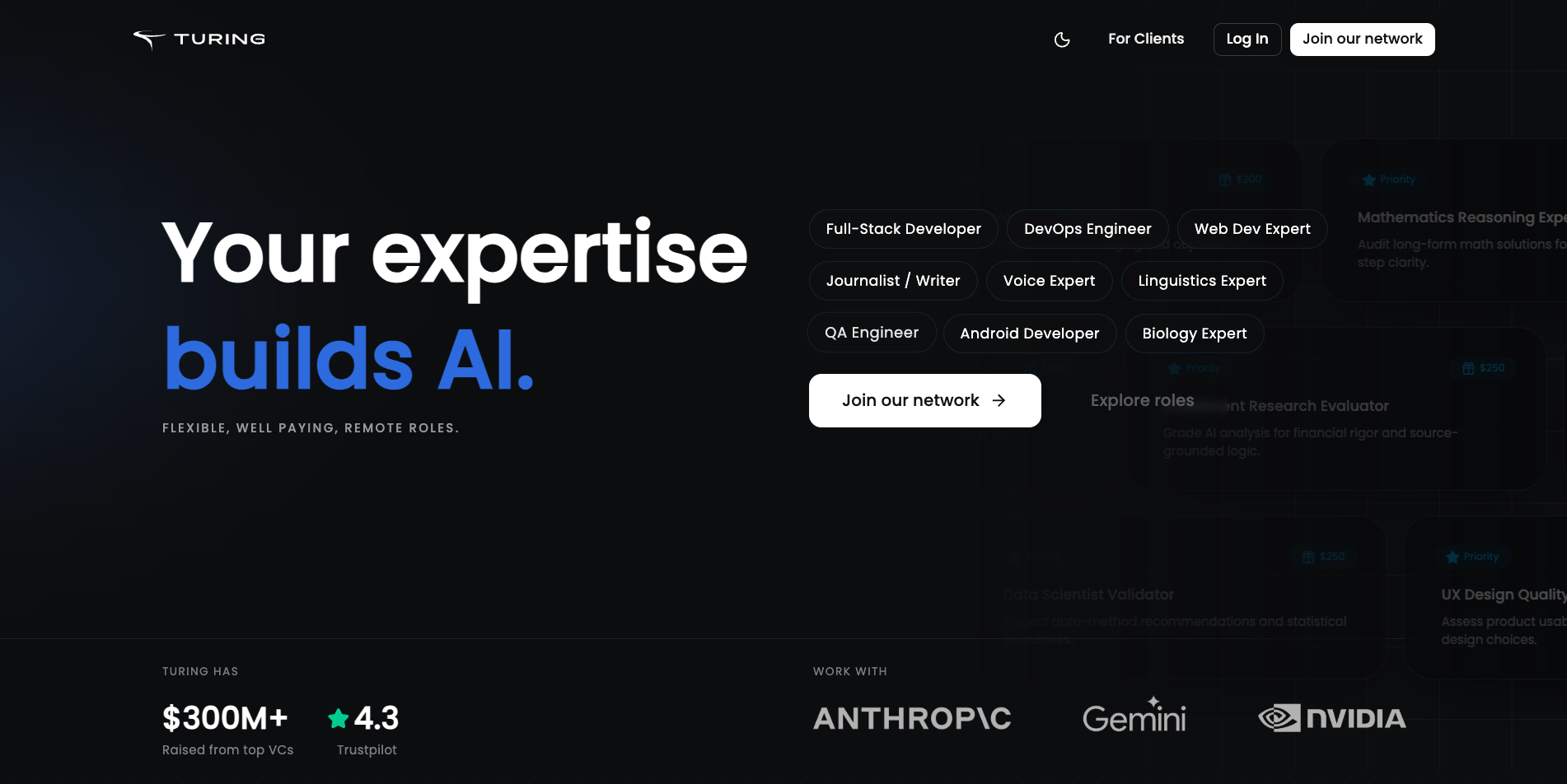
Turing is an AI-matched developer marketplace founded in 2018, drawing on a pool of 3M+ developers across 150+ countries and paying them as independent contractors through Deel.
A large embedded margin is the defining cost. Turing publishes no rate card, and third-party benchmarks place billing at $100 to $200 per hour. Independent reviews estimate 50% to 55% of each invoice is retained as margin, a figure Turing has not confirmed.
Two structural limits show up consistently in 2026 reviews. Developers are independent contractors who may hold other clients, and exclusive assignment is not a standard feature, so a 40-hour engagement is a block of reserved hours. Timezone commitment is a four-hour minimum overlap.
Our verdict: matching speed and pool size are real. The open question is what a five-figure monthly bill buys when the margin is unverifiable, the engineer may be shared, and worker classification stays on your side of the contract.
#3 Lemon.io
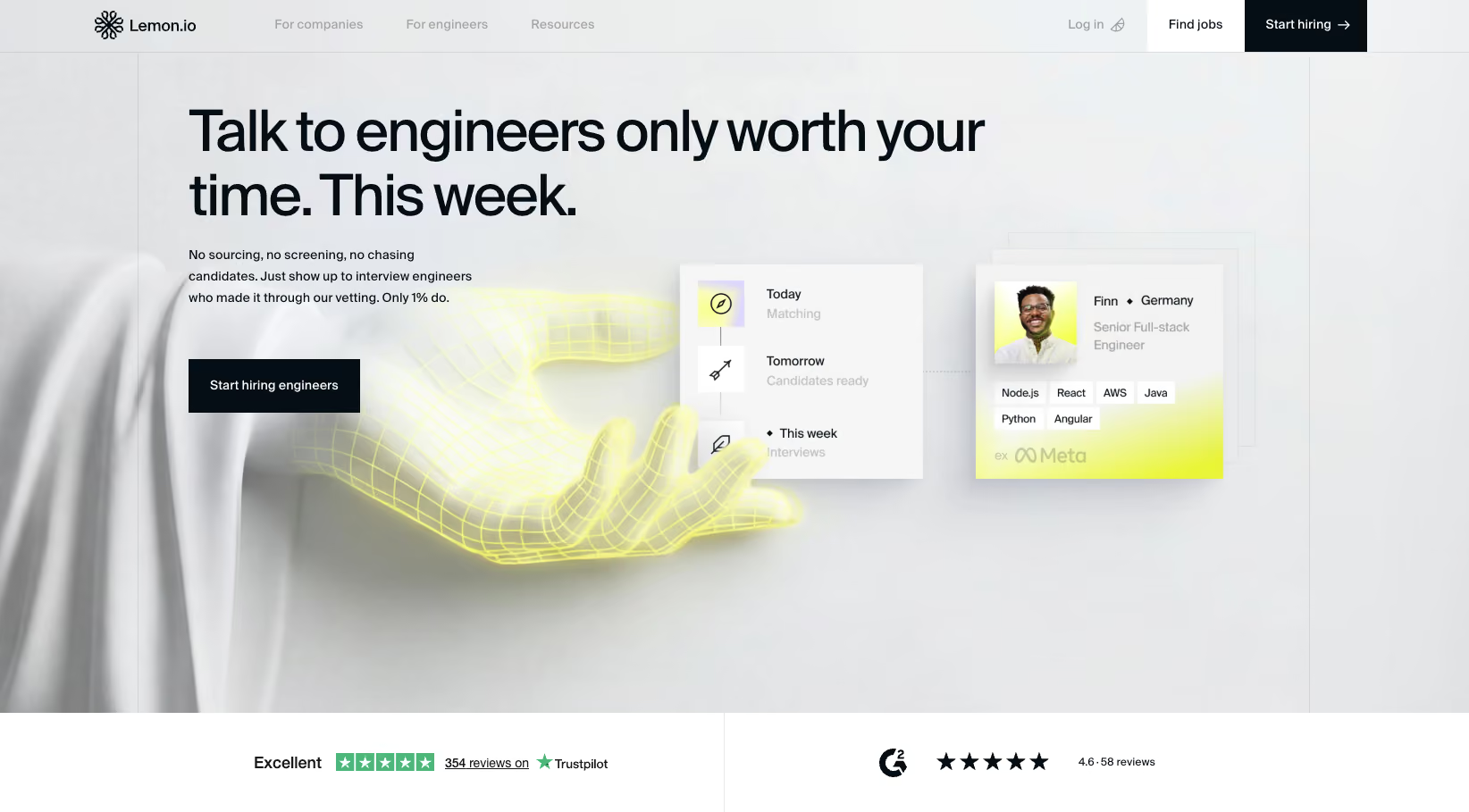
Lemon.io is a human-vetted developer marketplace aimed at early-stage startups, running four screening stages with roughly a 1.2% acceptance rate and rejecting anyone with under five years in the required stack.
Published rates and human screening are the genuine advantages. Tiers run from $55 to $200+ per hour by seniority, the four vetting stages are run by senior engineers with no AI screen, and matches arrive within 24 to 48 hours. Trustpilot sits at 4.8, among the highest here.
A 160-hour minimum is the constraint most buyers meet late: a full month at full-time pace before any work begins, which prices out pilots. Coverage widened in 2026 from Eastern Europe alone to Europe, LATAM, and the US, though US-hours overlap stays partial on the European bench.
Our verdict: on vetting rigor and rate transparency this is one of the strongest options on the list. The commitment floor is what decides it: a month of hours is easy to justify for a known project and hard to justify for a first hire.
#4 Gun.io
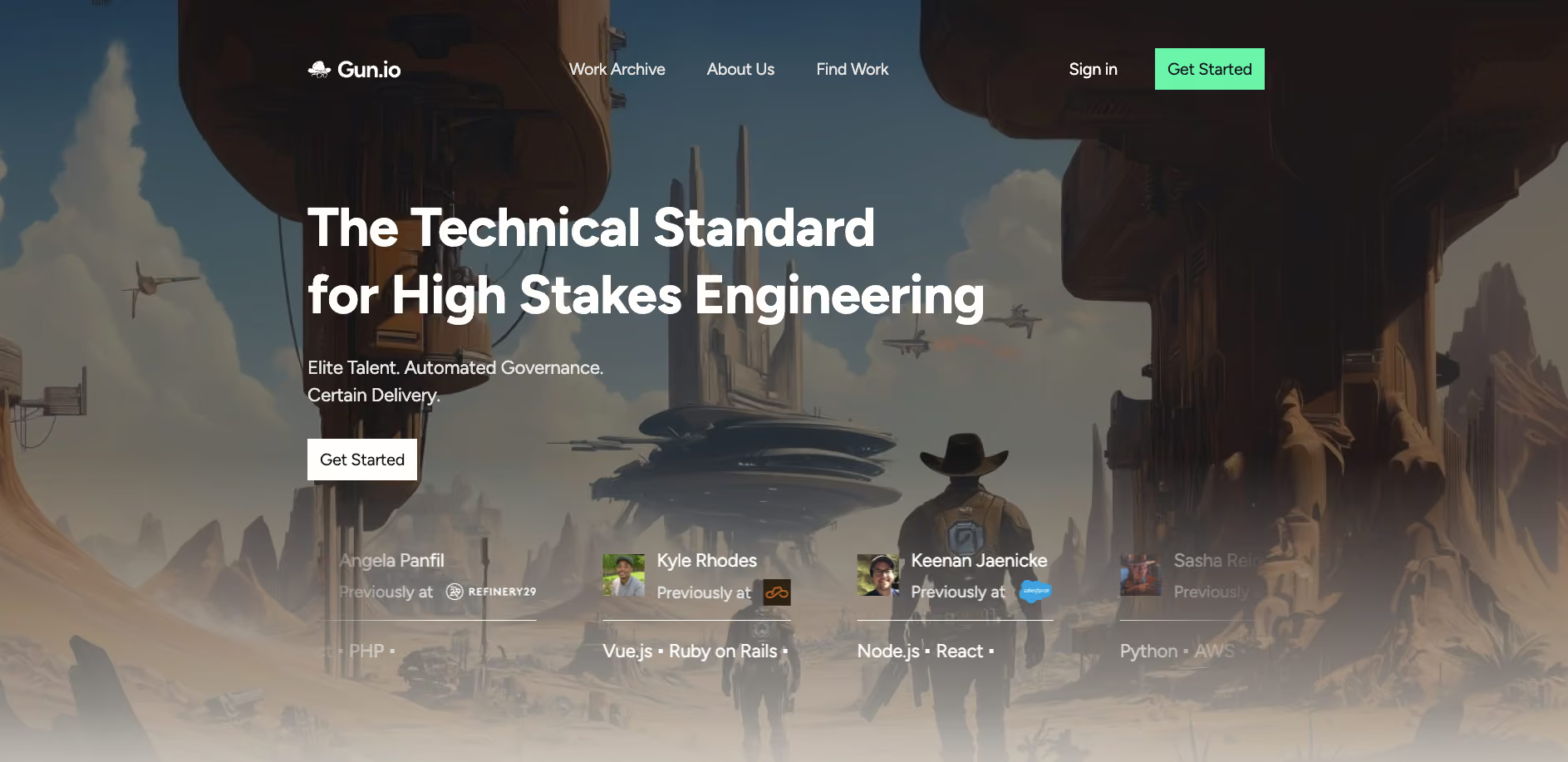
Gun.io is a senior freelance engineering network that screens for a minimum of five years of experience, handles contracts, payroll billing, and tax compliance on the talent side, and shows client rates in full before an engagement starts.
Rates displayed in full is the thing worth borrowing from this model. Rates run $100 to $200+ per hour inclusive of the fee, with no deposit and no subscription, and full-time placements cost 20% of first-year salary. The composition is visible before signing, which is rare here.
A premium floor comes with that clarity. The network is built around engineers with a decade or more of experience and longer contracts, so short tasks and mid-level roles are a poor use of it. Billing runs weekly against a one-week trial.
Our verdict: the transparency is the product here, and it is a real answer to the complaint that drives most Toptal comparisons. Budget is the gate: this sits at the top of the market, not below it.
#5 Arc.dev

Arc.dev is an AI-matched remote developer marketplace with a pool of 450,000+, surfacing shortlists through its HireAI engine and charging a 20% placement fee on full-time hires.
Speed and price are the draw. Contract rates land between $60 and $110 per hour, a $300 refundable deposit applies against the first invoice, and HireAI returns matches from the pool immediately. Client-side ratings are strong, with 4.8 on G2.
AI screening at the senior end is the documented weakness. Independent reviews describe shortlists that miss nuance on senior evaluations and turn generic on narrow stacks. Some clients also report contract-length requirements that sit awkwardly against the no-commitment positioning.
Our verdict: for mid-level work at mid-market rates the speed is hard to argue with. Senior hiring is where the automated shortlist starts handing the evaluation back to you, and that is the work the platform was supposed to absorb.
#6 Revelo
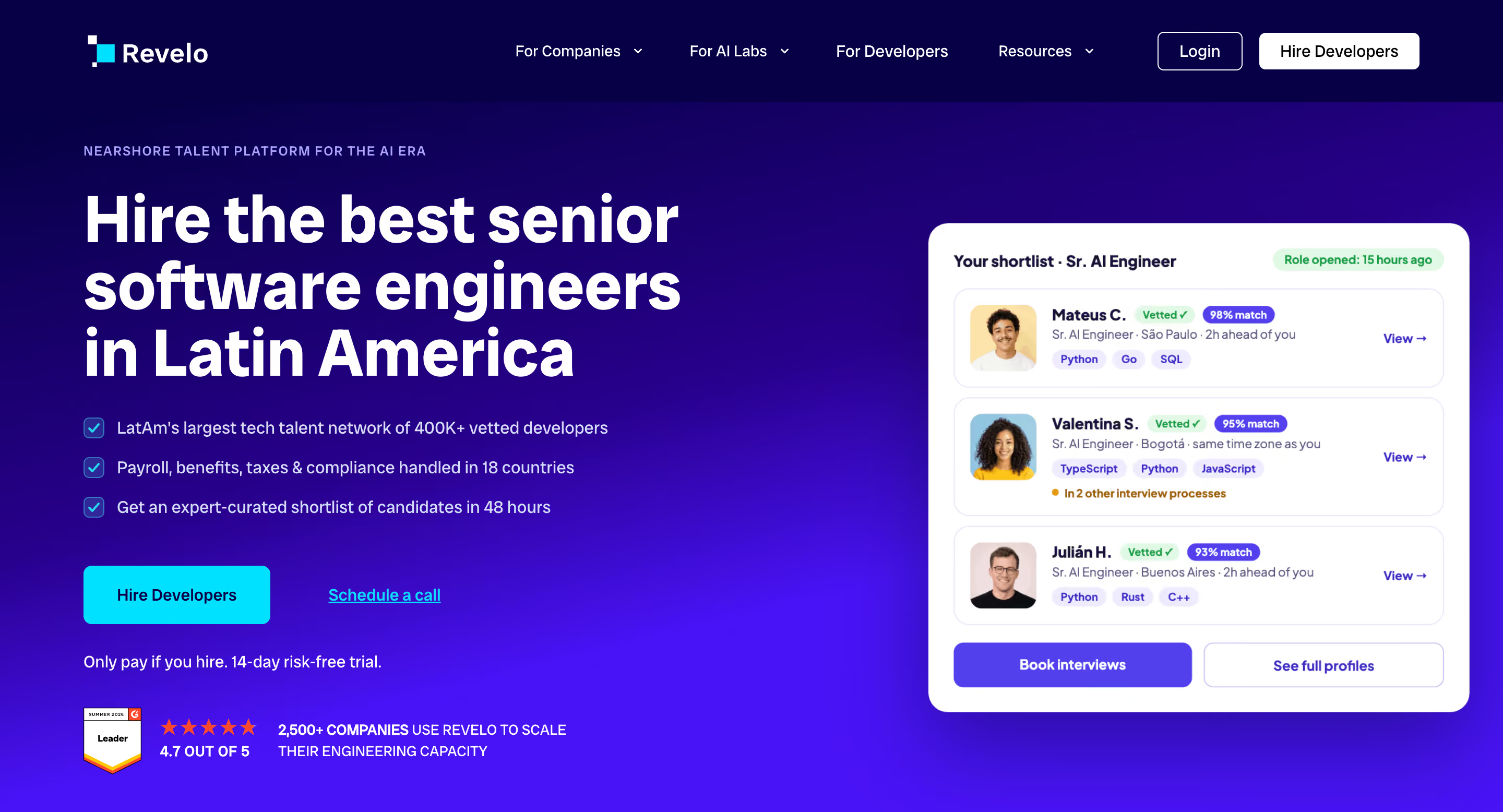
Revelo is a Latin American developer marketplace advertising 400,000+ vetted engineers across 18 countries, with an Employer of Record underneath so the engineer is formally employed without the client opening an entity.
Employment handled is what separates this from the marketplaces above it. The EOR layer puts payroll, benefits, and classification on Revelo's side of the contract. Shortlists arrive within roughly 72 hours, and time to hire averages 14 days.
A marketplace shape is the limit. The model places engineers, and the relationship stays a placement relationship, so a team that later needs an interim technical leader or a scoped build is starting a new vendor search.
Our verdict: this is the closest structural match to what a Toptal buyer usually actually wants: vetted engineers, aligned hours, and someone else holding the employment. Where it stops is engagement range.
#7 Andela
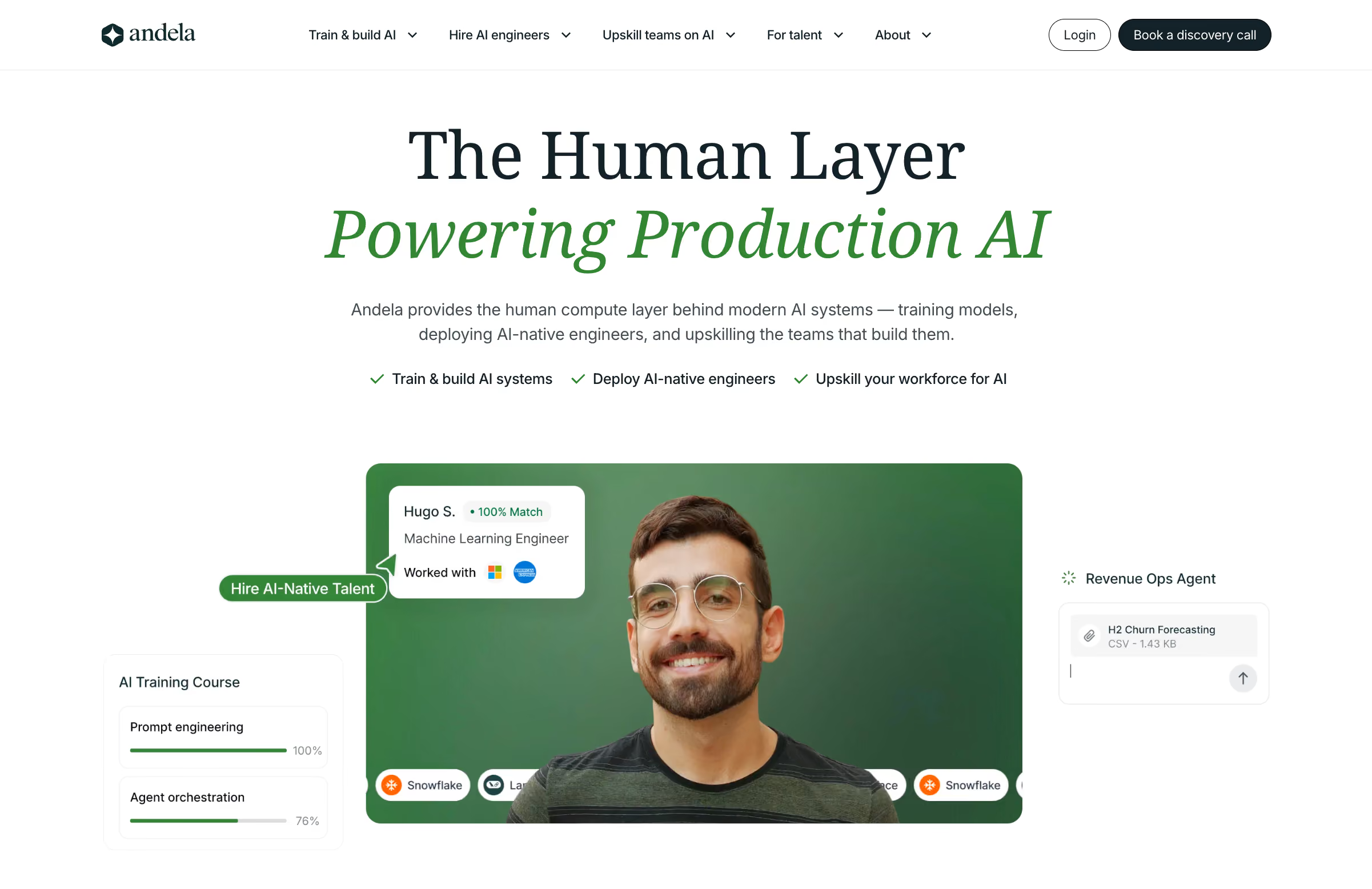
Andela is a global technologist network that raised $381M in total and reached unicorn status with a $200M Series E led by SoftBank Vision Fund 2 in 2021, covering application engineering, AI, cloud, data, mobile, QA, and product design.
Breadth of discipline is the real strength. Clients needing several disciplines at once, or stack combinations that regional networks miss, will find candidates here more often than on a LATAM-only or Europe-only platform.
A twelve-month floor applies to every engagement type, and technologists are contractors independent of both the client and the platform. Team size can flex inside that year, but the year itself does not, which makes this a commitment made before any evidence has come in.
Our verdict: the network depth justifies the attention for a programme of real size. For a single first hire, the minimum term asks for a decision that arrives well ahead of the information needed to make it.
#8 Terminal
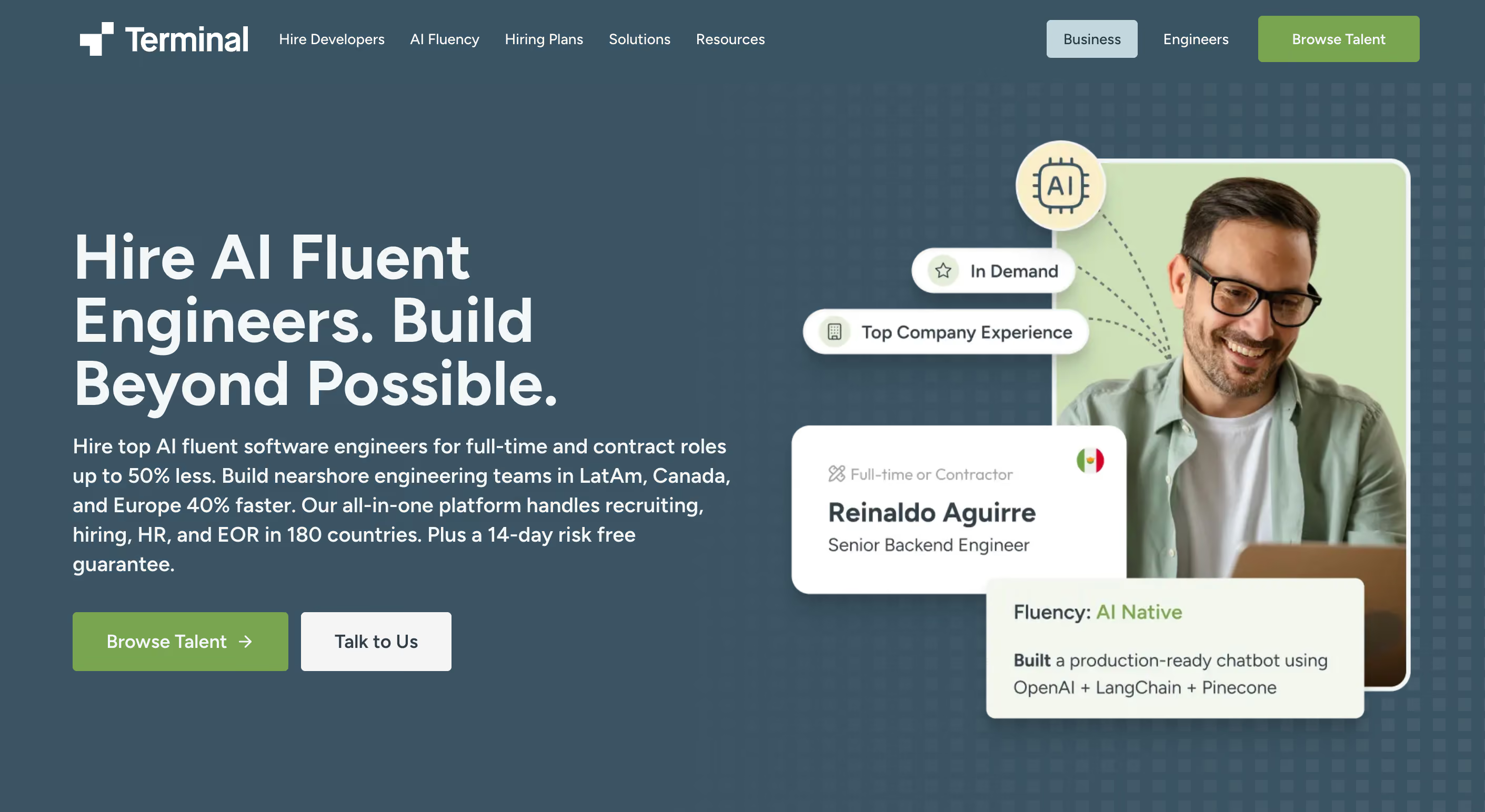
Terminal recruits engineers and then employs them under a Hire + Employ model, assuming the legal employment relationship, payroll, tax withholding, benefits, and local compliance while the client directs the work.
Recruiting and employment together is the model, and it removes the handoff that breaks in a marketplace-plus-EOR stack. Terminal owns the administrative layer end to end while the client directs the engineer.
Coverage reads wider than it operates in practice. Terminal can act as employer of record in 180+ countries, though it actively employs in nine core markets, so the headline figure describes legal capability while the bench sits in those nine. The management fee is not published.
Our verdict: inside those nine markets this is a clean structure with a real advantage over stitching two vendors together. The questions to settle before signing are which market your role sits in and what the management fee actually is.
#9 BairesDev
BairesDev is a Latin American software development agency whose engineers remain its own employees, drawing primarily from Argentina, Colombia, and Mexico, which puts US timezone overlap into the model by default.
Employed engineers on aligned hours is a genuine structural answer to the freelance model. Timezone overlap is built in by geography, and because engineers are BairesDev employees, classification and payroll never reach the client.
An agency relationship is what you are buying, with the engineer belonging to BairesDev's structure throughout. Teams that want the person integrated into their own org chart, with the option of eventually converting them onto their own payroll, are buying a different thing.
Our verdict: for delivery capacity this is a solid model and the timezone advantage is real. The distinction that matters is whether you want capacity from an agency or a person on your team.
#10 Upwork
Upwork is the largest open freelance marketplace, where clients post work, receive proposals, and run their own screening, with the platform providing contracts, escrow, and payments, and no vetting layer of its own.
No markup on the engineer's rate is the structural advantage: the rate you agree is the rate, with a marketplace fee on top rather than a margin folded inside it. For a buyer who can screen well, that is the cheapest path to a competent contractor on this list.
No screening layer is the other side of the same coin. Every filter is yours to build, which turns hiring time into the real cost, and freelancers work independently with classification sitting entirely on your side.
Our verdict: as a price comparison this wins outright and it is worth naming as the honest floor. What it does not do is the work that a vetted network exists to do, so the saving lands as time spent on your side.
#11 Fiverr Pro
Fiverr Pro is the vetted tier of Fiverr's marketplace, organised around fixed deliverables, covering web and mobile development, software architecture, CMS and e-commerce builds, and UI/UX design.
Fixed-price deliverables suit a well-specified build. Buyers pay a 5.5% service fee on each order, and for a defined artifact the total is knowable in advance in a way hourly engagements rarely are.
Scope expansion is the recurring pattern. Extra revisions, added features, and tighter deadlines each become another purchase, so a project priced at one number frequently settles at several times it once the real requirements surface.
Our verdict: for a bounded artifact with a written spec this is efficient and cheap. Ongoing product engineering is the wrong shape for it, and that mismatch is where the cost stops being predictable.
What We Think
Most alternatives to Toptal compete on the axis Toptal chose, the hourly rate and what sits inside it. Gun.io shows the composition, Lemon.io undercuts the rate, Upwork removes the margin and hands you the screening. Each answers the invoice and leaves the structure untouched.
The harder problem appears when the engagement has no end date. An hourly marketplace bills platform margin in month twenty-four exactly as in month one, and classification stays where it started. That is structural, and no amount of rate negotiation reaches it.
Tecla holds both shapes. A scoped build runs as a scoped engagement, and a role that turns permanent moves into direct-hire, with the engineer employed under EOR from the first day either way.
Frequently Asked Questions





%20(1).avif)