
Fiverr works well for the first version of a problem: a logo, a landing page, a one-off script. It stops working when the same brief comes back every month and the person who did it last time is gone.
What changes at that point is what you are buying. A task has become a role, and a role brings questions a gig platform does not answer: who screens for real skill, who legally employs the developer, and what happens when they leave mid-project.
The ten below are compared on how they vet, what they charge and how that charge is structured, who employs the developer, and what recourse exists when a match fails. Figures come from published materials where they exist and independent comparisons where they do not.
Top 10 Fiverr Alternatives for Hiring Developers
#1 Tecla
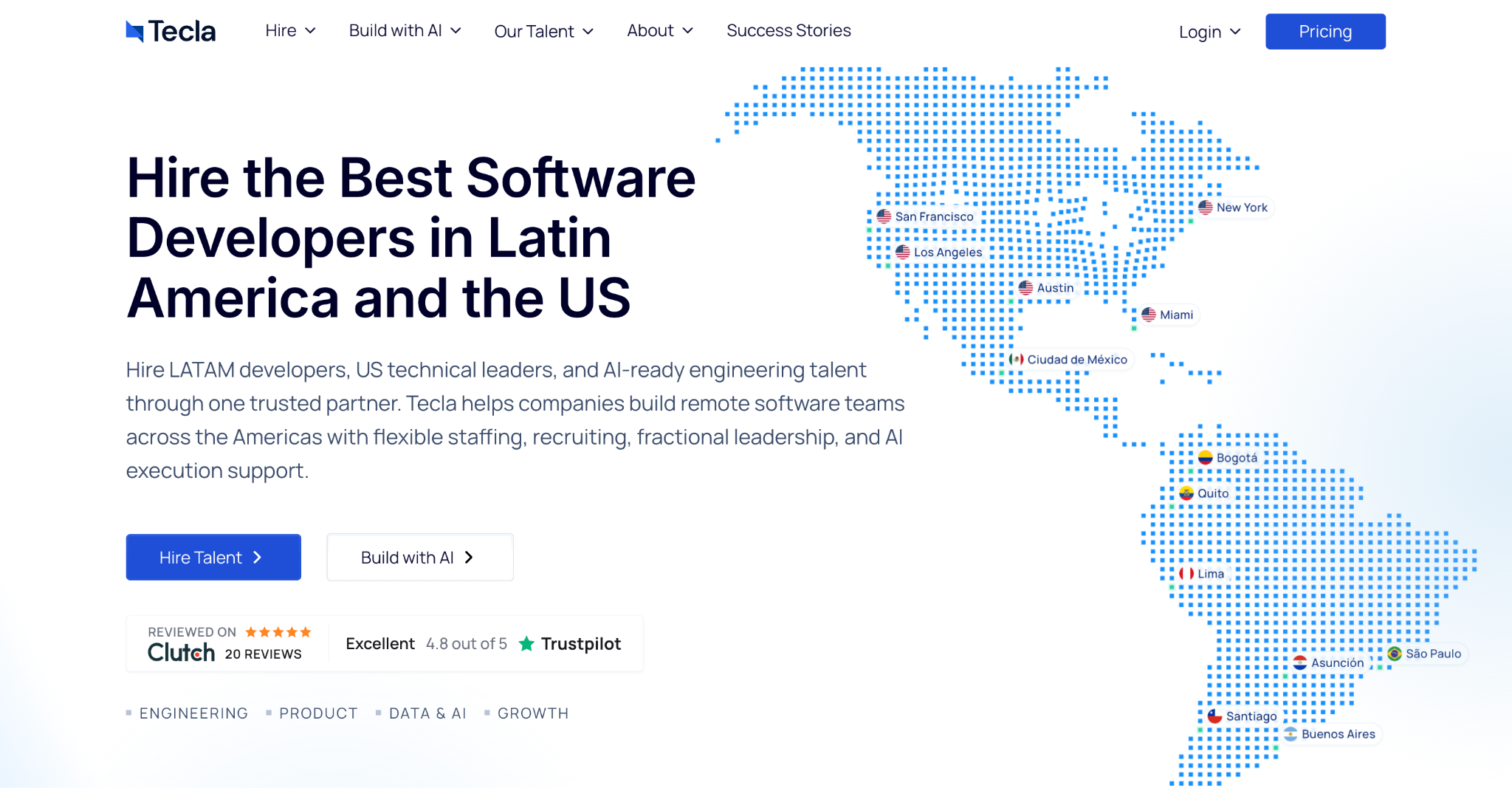
Tecla has been placing remote software engineers with US companies since 2013, from a network of 50,000+ vetted professionals across the US and 18+ Latin American countries. Every candidate passes an AI-fluency screen alongside a live technical assessment.
Screening that arrives finished is the first difference from a gig platform: candidates reach an interview within 5 days of the intake call, already through a live technical assessment and an AI-fluency screen.
Employment handled by default puts the engineer under Tecla's EOR in their own country, so classification, payroll, and local labour law never reach the client.
One scoped fee replaces a percentage on every order, confirmed before any commitment, so the number does not move with volume or platform policy.
A 90-day replacement guarantee sits in the engagement agreement, confirmed before signing. It is rarely called on: 97% of placements succeed and 96% of the talent stays.
Our verdict: a gig platform is built for work that ends. Twelve years of placing remote engineers went into the version where the work continues, and the same relationship covers direct-hire, staff augmentation, fractional leadership, or a scoped build.
#2 Toptal
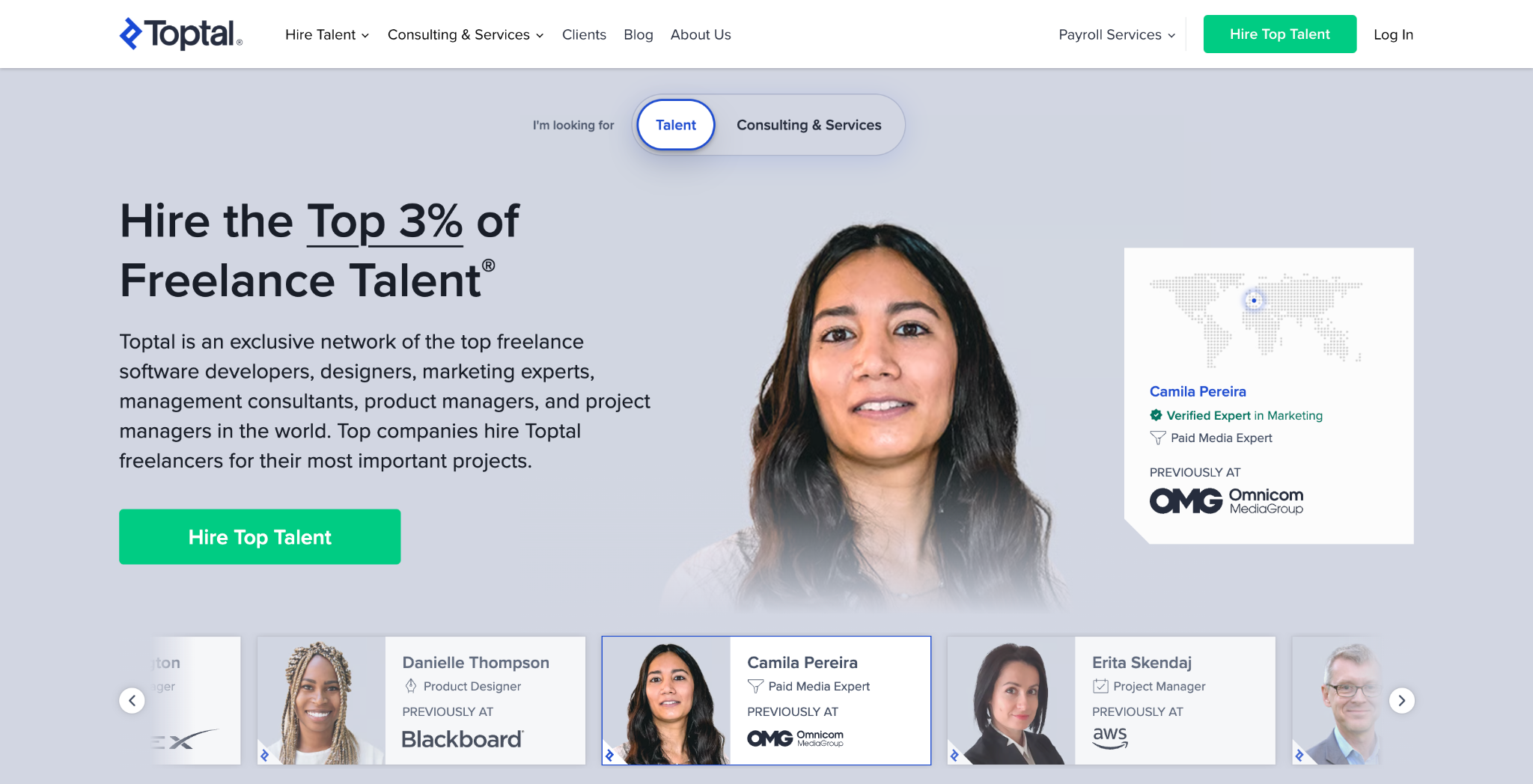
Toptal is an invite-only vetted network accepting fewer than 3% of applicants, charging $60 to $150+ an hour alongside a $500 deposit and a $79 monthly subscription.
Real screening and no bidding is the genuine upgrade: multi-stage vetting, direct matching, and a 24-hour shortlist instead of a queue of proposals.
Three charges instead of one is the structure. The hourly rate carries an undisclosed margin, estimated by independent analyses at 30% to 60% above the developer's take-home, on top of the deposit and the monthly fee.
Our verdict: for a well-funded team the rigour justifies the rate. Modelling the total is the part that stays impossible, because the margin is never broken out.
#3 Upwork
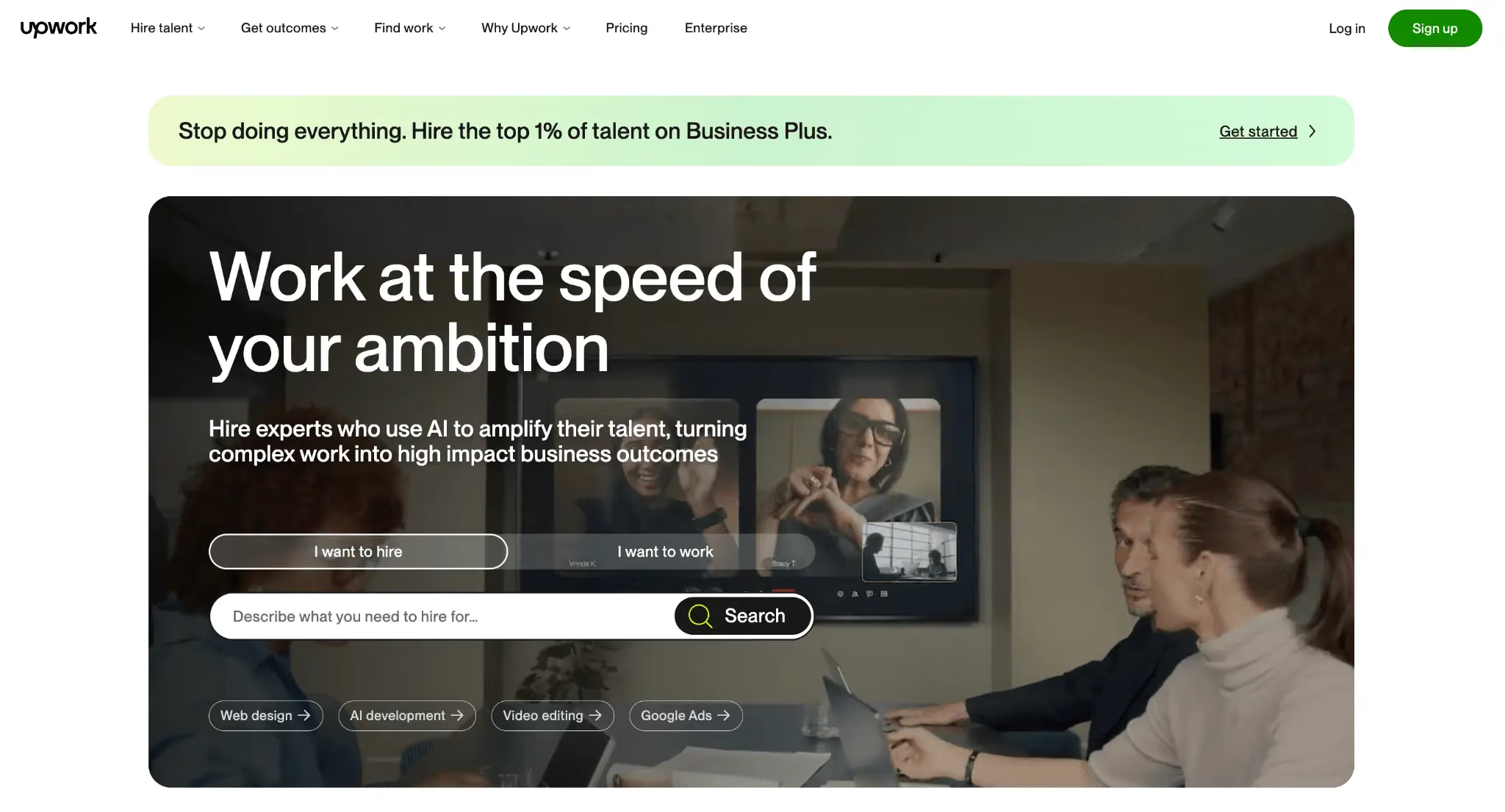
Upwork is the largest open marketplace with 18M+ registered freelancers and 800,000+ active clients, where clients post work and run their own screening.
Control over selection is the step up from a gig listing: you write the brief, compare proposals, and negotiate the rate directly with no margin folded inside it.
Fees restructured in May 2025 replaced a predictable tiered model with a variable rate, client marketplace fees run up to 10% on Business Plus, and client-initiated direct contracts now carry a $49 monthly charge.
Our verdict: as a wider version of the same model this works, and the rate stays transparent. The screening burden is identical to Fiverr's, only across a larger pool.
#4 Turing
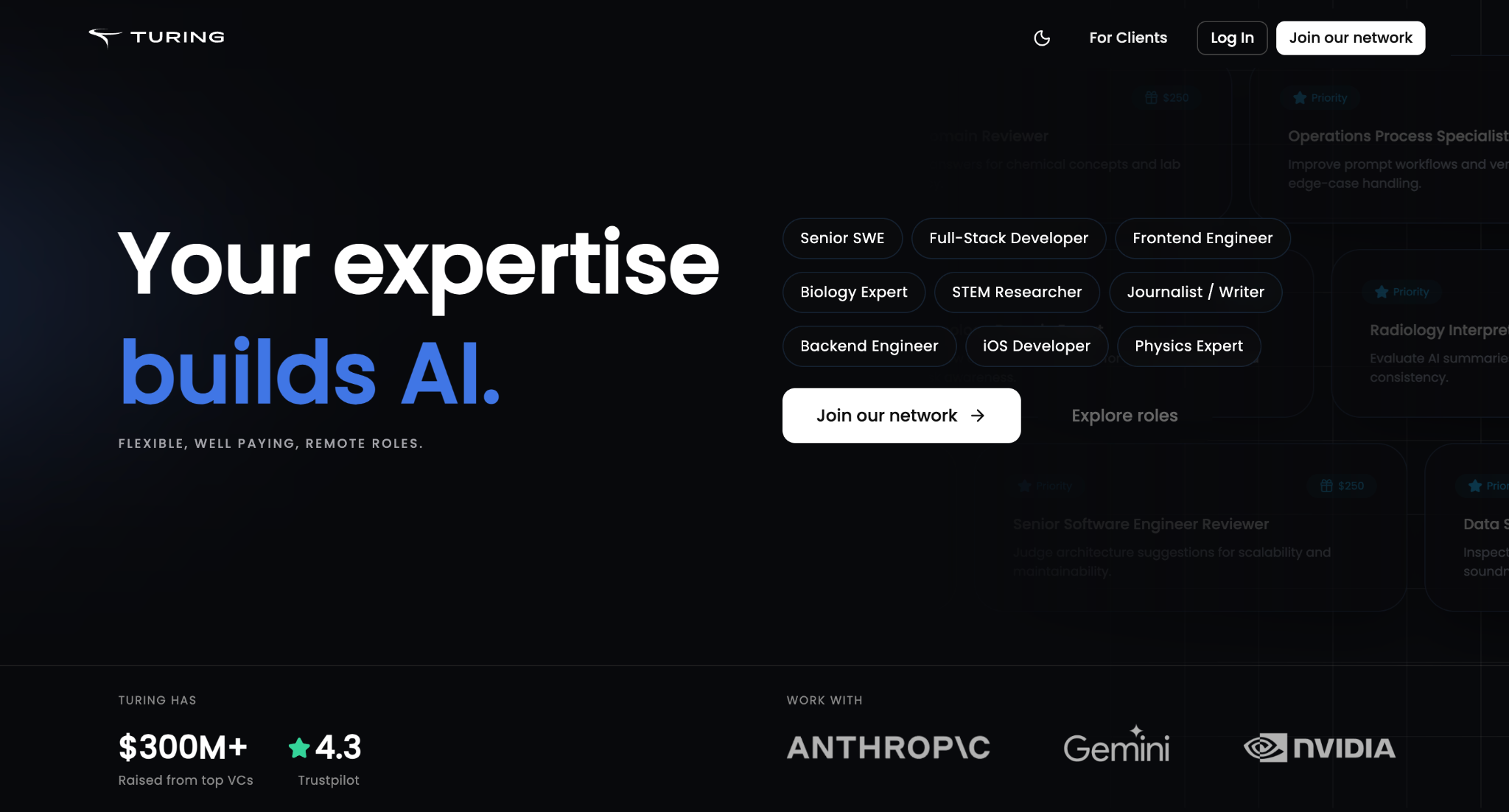
Turing matches developers using AI from a pool of 3M+ across 150+ countries, paying them as independent contractors through Deel.
Scale and matching speed are the strengths, with candidates surfacing in 3 to 5 days from a network no specialist firm matches on size.
An unverifiable margin is the cost: no published rate card, and independent reviews estimating 50% to 55% of each invoice retained, a figure Turing has not confirmed.
Our verdict: the bench is enormous and the matching works. Value is hard to judge when the margin is undisclosed and exclusive assignment is not standard.
#5 Lemon.io

Lemon.io screens developers through four human stages at roughly a 1.2% acceptance rate, rejecting anyone with under five years in the required stack, and publishes its rate tiers.
Published tiers and human screening are the advantages: four vetting stages run by senior engineers, no AI screen, matches inside 24 to 48 hours, Trustpilot at 4.8.
A 160-hour minimum is the jump most Fiverr buyers are not ready for. That is a full month at full-time pace before any work begins.
Our verdict: on vetting and rate transparency this is one of the strongest steps up available. The commitment floor is what decides whether it fits yet.
#6 Arc.dev
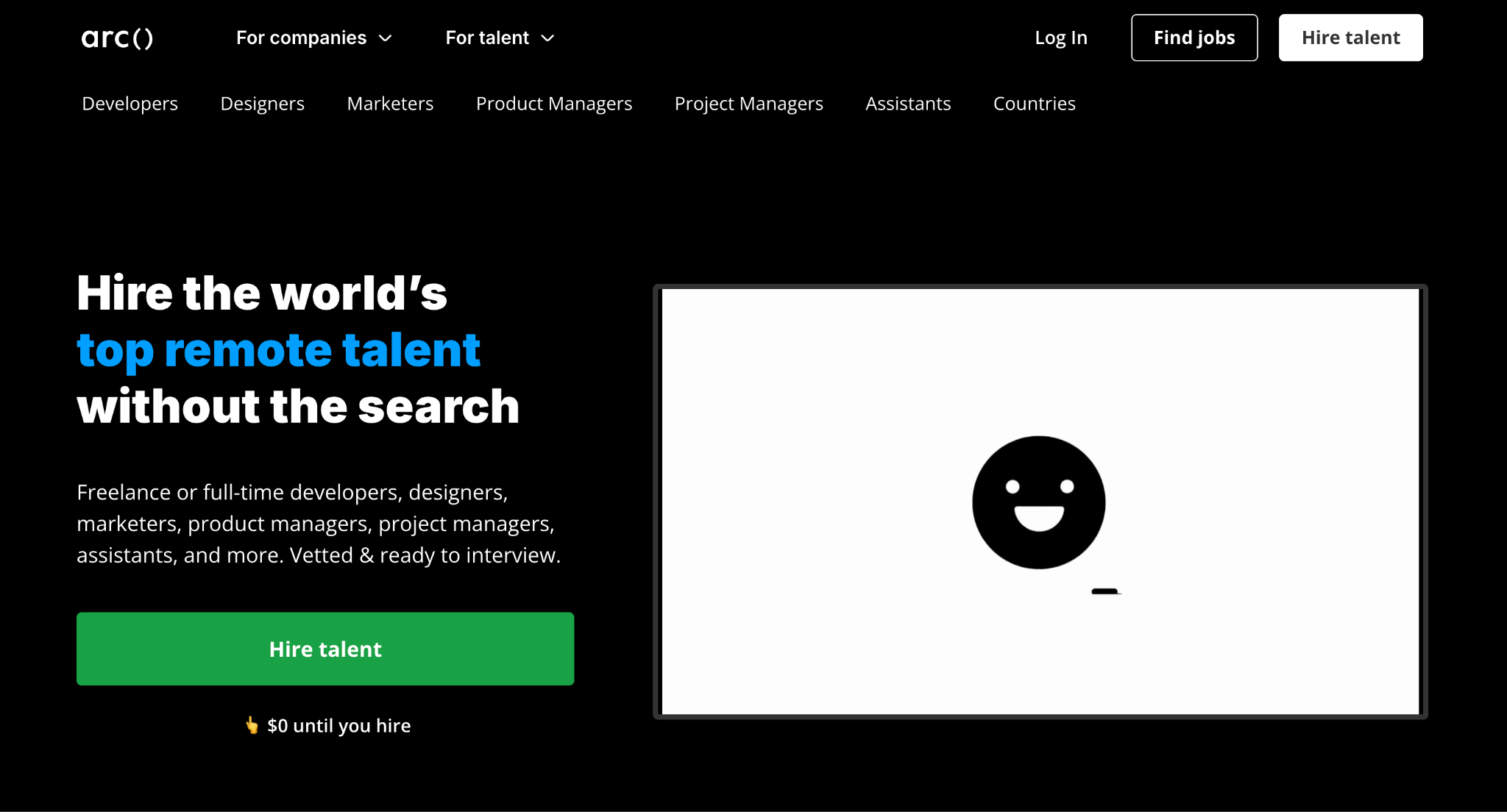
Arc.dev is an AI-matched marketplace advertising the top 2% of remote developers from a pool of 450,000+, charging a 20% fee on full-time conversions.
Instant matching at a lower rate is the draw: contract rates of $60 to $110 an hour and a $300 refundable deposit against the first invoice.
AI screening at the senior end is the documented weakness, with independent reviews describing shortlists that miss nuance on senior evaluations and turn generic on narrow stacks.
Our verdict: for mid-level work this is faster and cheaper than assembling a shortlist yourself. Senior hiring is where the automation hands the evaluation back.
#7 Gun.io
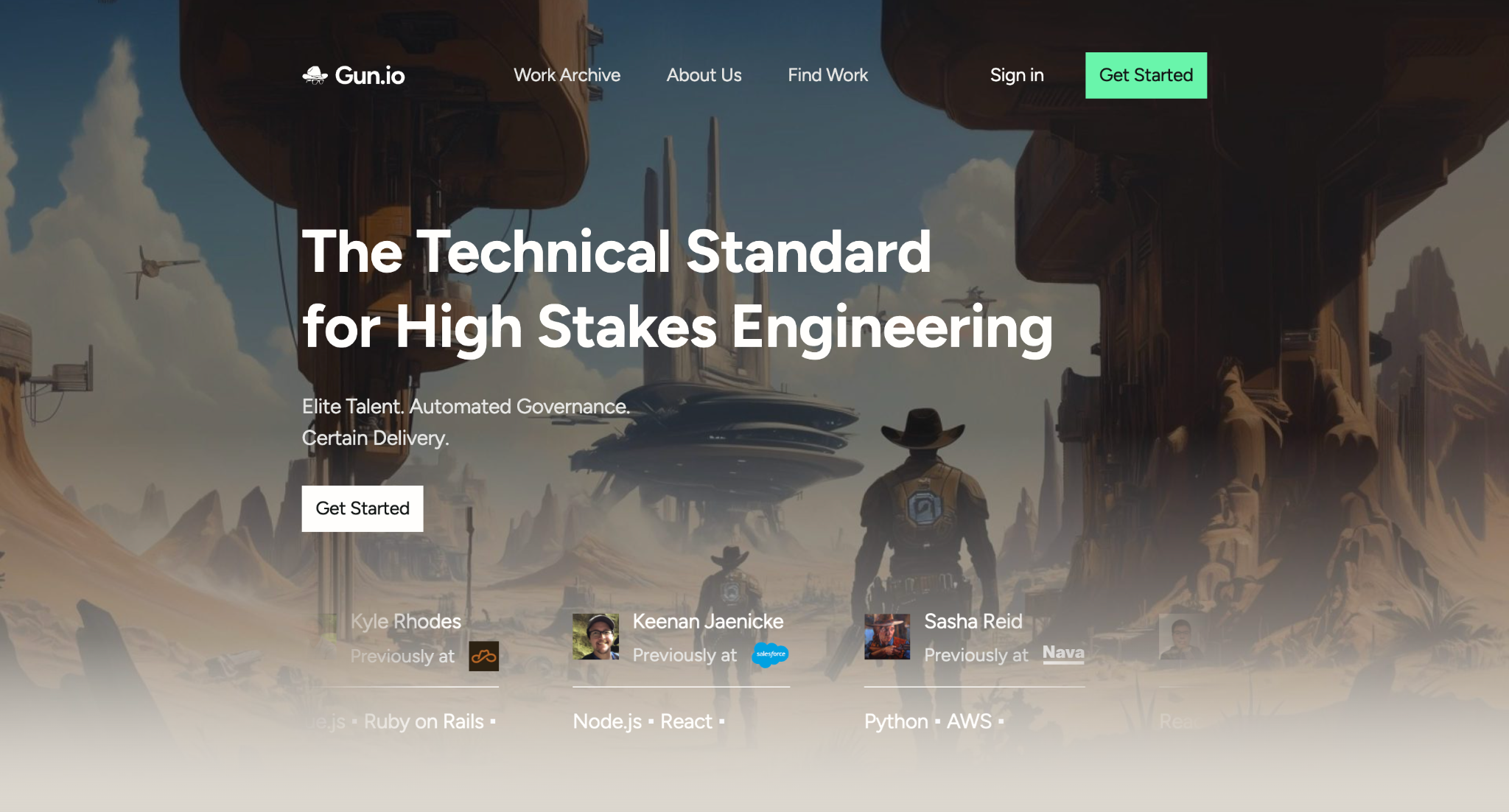
Gun.io screens for a minimum of five years of experience, handles contracts, payroll billing, and tax compliance on the talent side, and shows client rates in full before an engagement starts.
Rates displayed in full is the direct answer to a marketplace fee you cannot see: no deposit, no subscription, and full-time placements at 20% of first-year salary.
A premium floor comes with it, since the network is built around engineers with a decade or more of experience and longer contracts.
Our verdict: the transparency is the product, and it fixes exactly what an opaque service fee obscures. Budget is the gate.
#8 Contra
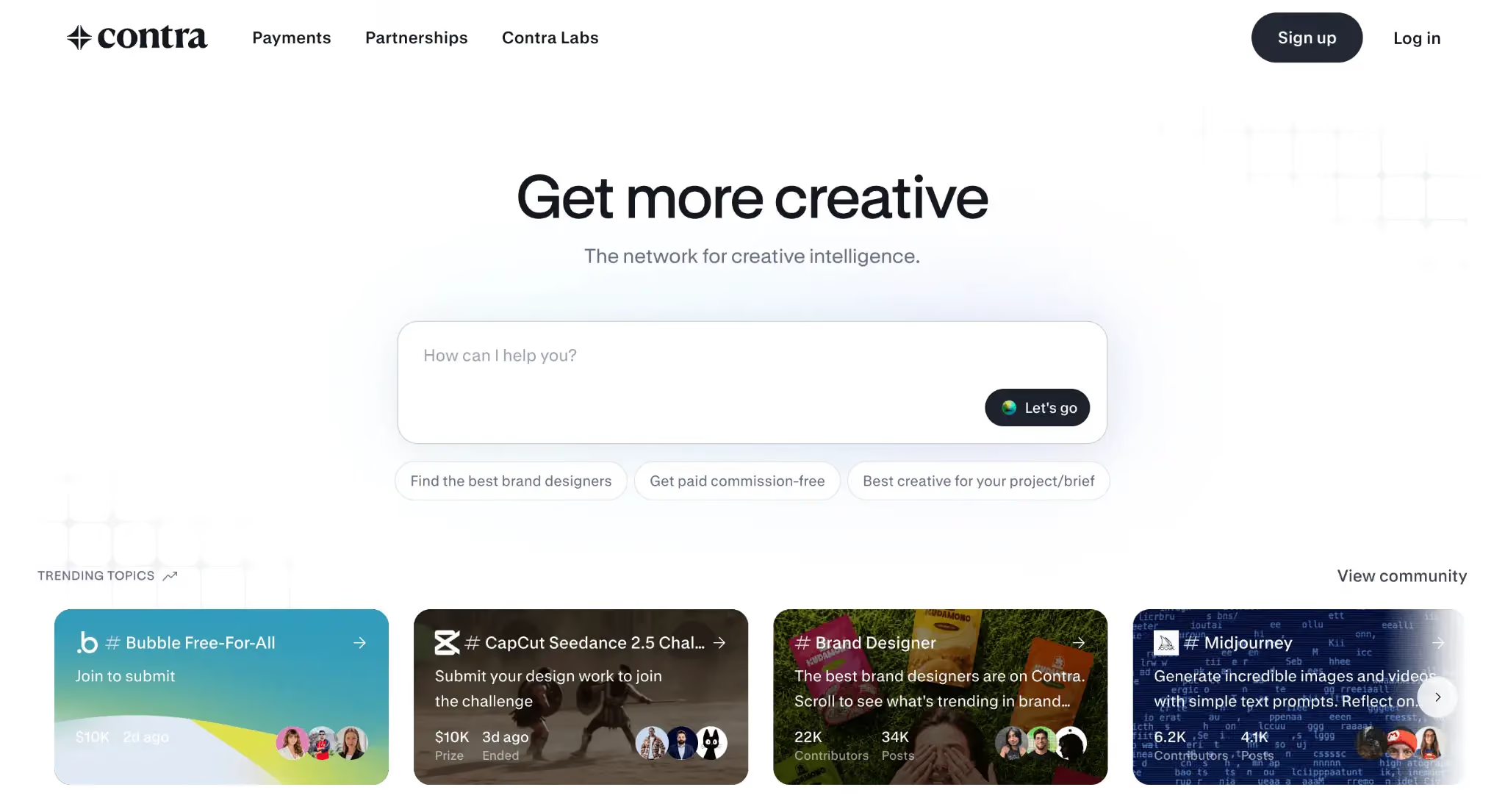
Contra runs a commission-free model, charging a flat $29 per contract, with portfolio-first discovery and no proposal credits to buy.
A flat fee, not a percentage is the structural difference, and against Fiverr's 20% freelancer commission it changes the quoted rate rather than only the invoice.
No vetting at all is the tradeoff. Discovery is portfolio-first, so judging technical depth from a portfolio is entirely your work.
Our verdict: on fee structure this is the cleanest escape from percentage-based platforms. What it leaves untouched is the screening, which is where the real cost sits.
#9 Revelo
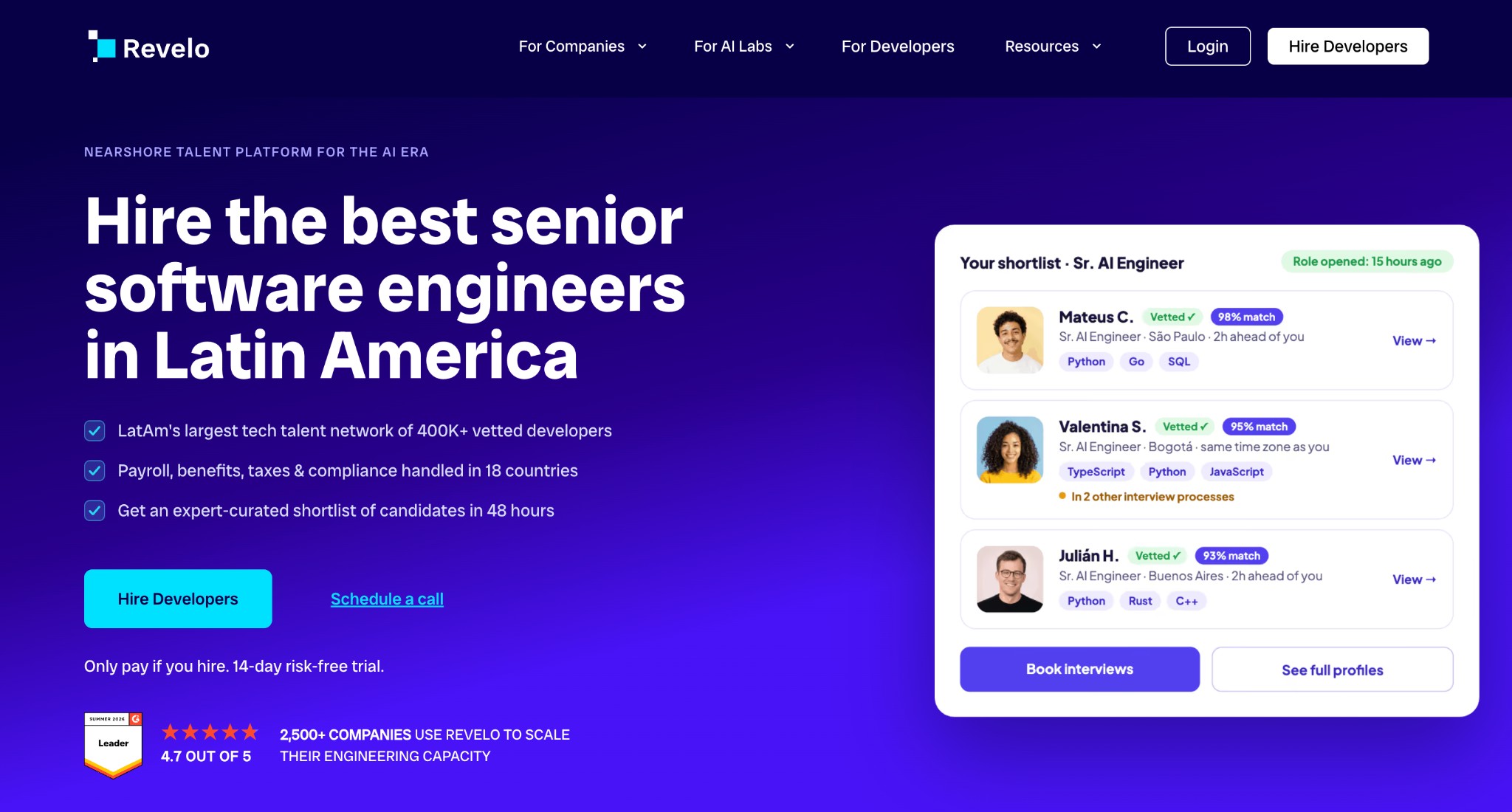
Revelo is the largest Latin American developer marketplace, advertising 400,000+ vetted engineers across 18 countries with an Employer of Record underneath the placement.
Scale with published pricing is uncommon here, alongside shortlists within roughly 72 hours and an average time to hire around 14 days.
A placement relationship is where it ends. The model matches and employs engineers, so a later need for interim technical leadership starts a new vendor search.
Our verdict: for a first long-term hire out of the region this is a strong and transparent option. Engagement range is the boundary to check.
#10 South
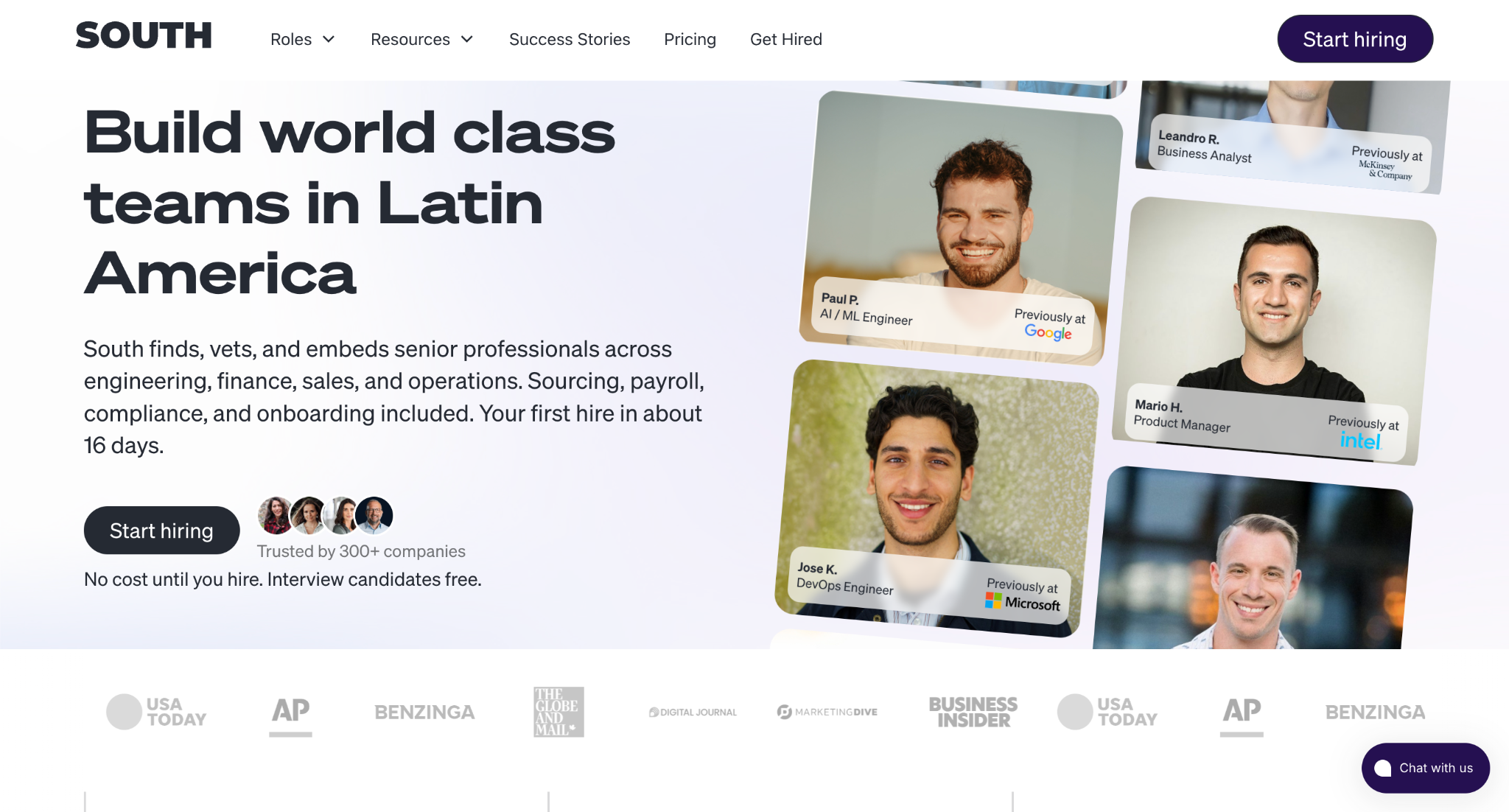
South places pre-vetted Latin American professionals who work in the client's time zone, positioned for long-term contribution rather than isolated tasks.
Timezone alignment by geography is the structural argument, and it holds: LATAM overlap with US business hours comes from where the person lives.
Terms not published across pricing, replacement, and employment structure, so the commercial questions are settled entirely in conversation.
Our verdict: the nearshore logic is sound and the long-term framing is the right one for a team outgrowing gig work. Diligence before signing is where more work is needed.
The Pattern Across This List
Every option here is a better version of the same purchase: someone competent, for a while, on an invoice. The vetting improves, the fee structure changes shape, the shortlist arrives faster. None of that answers what happens when the role stops having an end date.
Contra takes the fee close to zero and hands the screening back. Toptal, Lemon.io, and Gun.io charge a margin to do that screening properly. Upwork widens the pool without changing the model. Across all five, the developer stays a contractor and the risk stays with the client.
Tecla has spent twelve years on the purchase that comes after: the screening finished before the interview, the engineer employed under EOR from the first day, and one relationship that holds a scoped build, a longer seat, or a direct hire.
Frequently Asked Questions





%20(1).avif)