.avif)
The word platform covers four different products here, priced on different logic and. A job board and a staffing partner turn up in the same search, and one hands you a stack of applications while the other hands you a hire.
Each of the eleven below is compared on how it vets, how it prices, who legally employs the developer, how much of your working day they cover, the term that matters most for that model, and what recourse exists when a match fails.
Figures come from each platform's published materials where they exist, and from independent comparisons where they do not.
Top 11 Platforms for Hiring Remote Developers
#1 Tecla
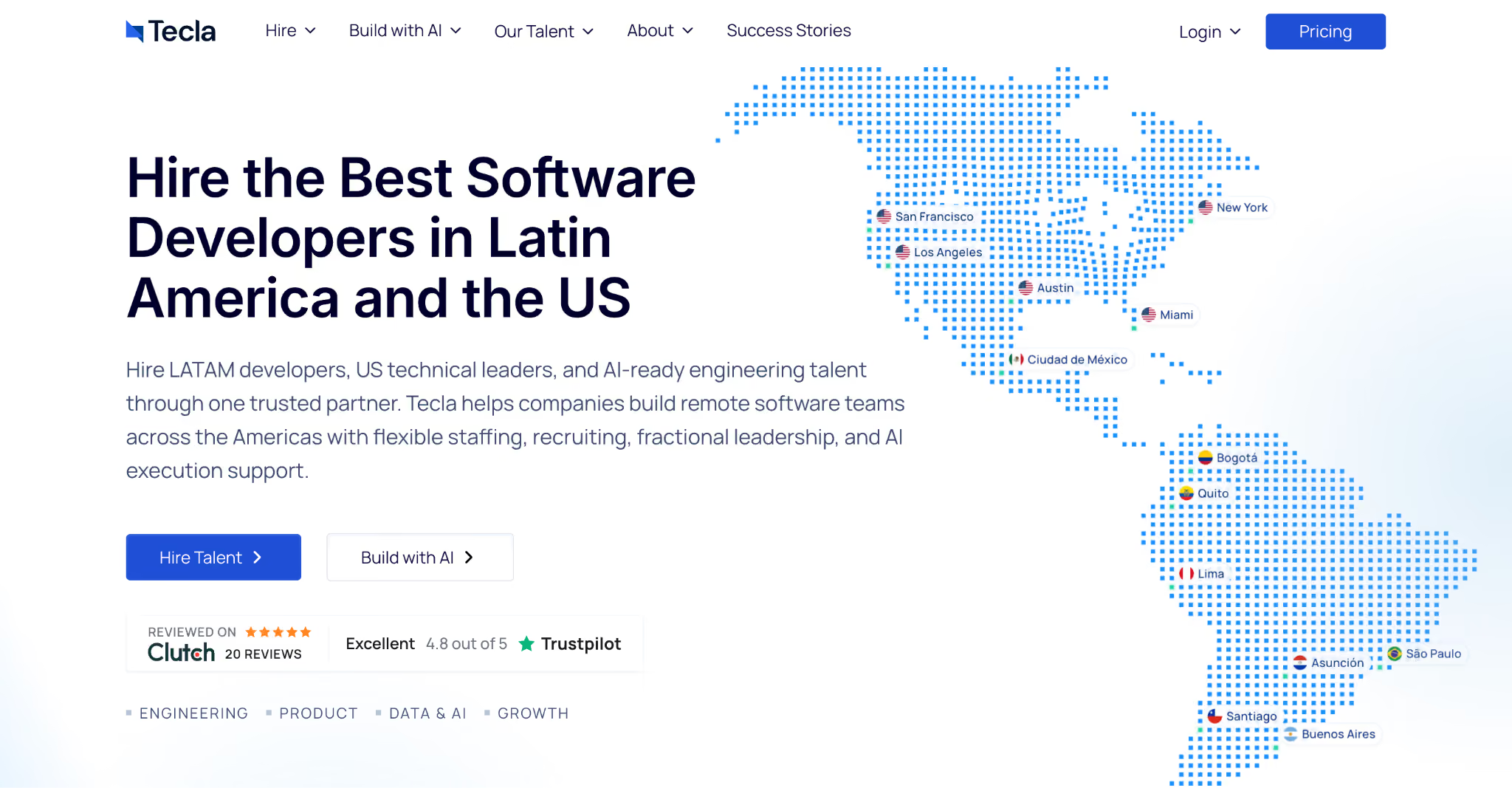
Tecla has been placing remote software engineers with US companies since 2013, from a network of 50,000+ vetted professionals across the US and 18+ Latin American countries. Every candidate passes an AI-fluency screen alongside a live technical assessment.
Screening that arrives finished is the difference from a platform: candidates reach an interview within 5 days of the intake call, already through a live technical assessment and an AI-fluency screen.
The employment layer comes included, with the engineer employed in their own country under Tecla's EOR, so worker classification and payroll never land on the client.
The whole network sits in your working day, across the US and Latin America, so overlap comes from where Tecla recruits and not from a filter applied to a global pool.
A 90-day replacement guarantee is agreed before signing and written into the engagement. It is rarely used: 97% of placements succeed and 96% of the talent stays.
Our verdict: the platforms here hand you candidates and leave the rest. More than a decade of placing remote engineers with US teams went into removing that gap, and the same relationship covers direct-hire, staff augmentation, fractional leadership, or a scoped build.
#2 Toptal
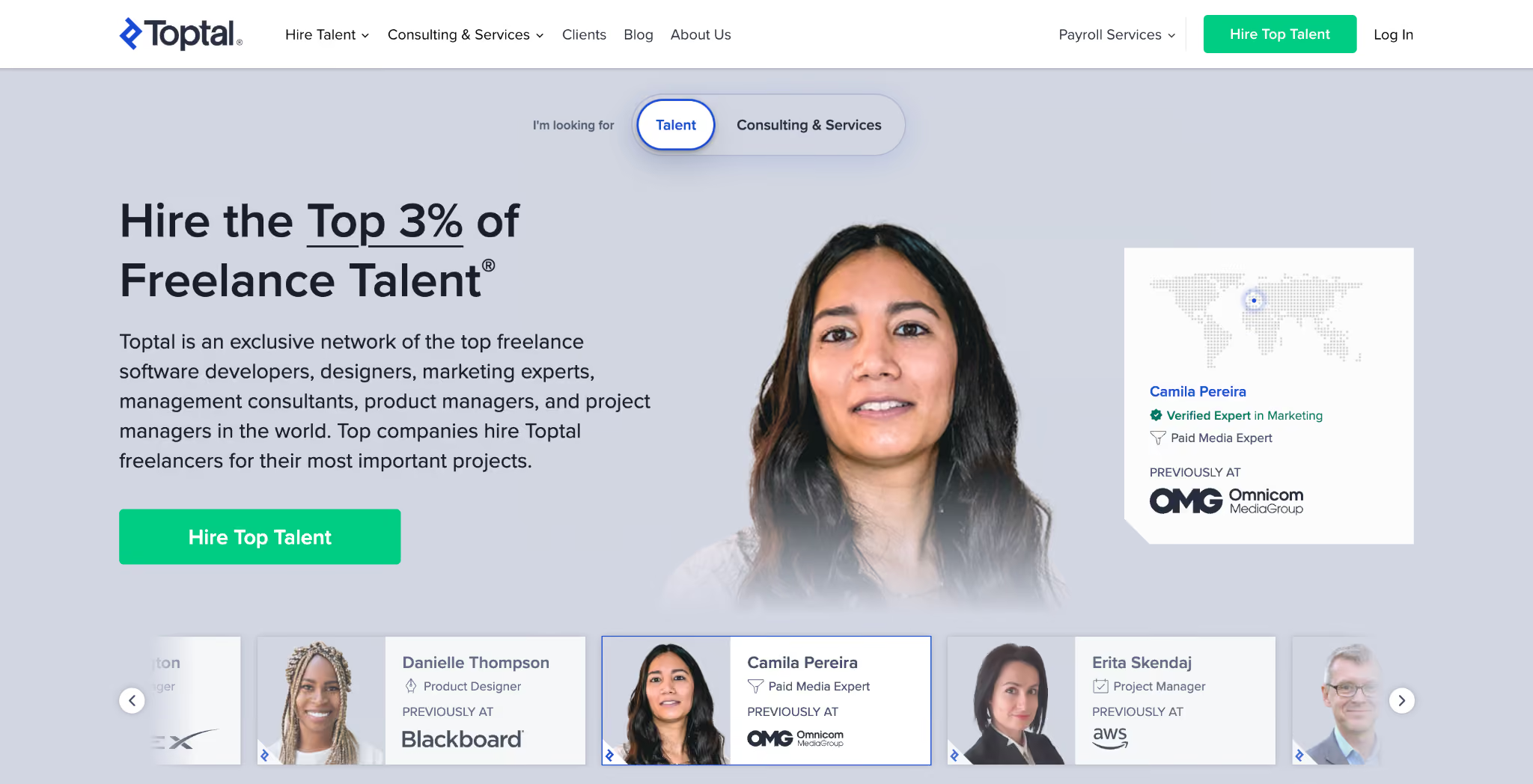
Toptal is a vetted freelance marketplace accepting fewer than 3% of applicants, with a $500 refundable deposit required before matching begins.
Human-led vetting is real, and the 24-hour shortlist is genuinely fast. US-based senior engineers on the platform commonly bill above $150 an hour.
Built for enterprise procurement is the recurring criticism. Independent reviews describe pricing and sales-heavy onboarding tuned to annual engineering budgets, a $500 deposit before matching, and developers who work as contractors without short trial options.
Our verdict: for a well-funded team that needs a senior engineer this week, the rigour justifies the rate. Startups burning runway tend to find the cost-to-value ratio too steep.
#3 Turing
Turing matches developers using AI from a pool of 3M+ across 150+ countries, paying them as independent contractors through Deel.
Scale and matching speed are the real strengths, with candidates surfacing in 3 to 5 days from a pool no specialist firm matches.
An unverifiable margin is the cost. Turing publishes no rate card, and independent reviews estimate 50% to 55% of each invoice is retained, a figure Turing has not confirmed.
Our verdict: the bench size and the speed hold up. What the bill actually buys is harder to judge when the margin is undisclosed and exclusive assignment is not standard.
#4 Arc.dev
Arc.dev is an AI-matched marketplace advertising the top 2% of remote developers from a pool of 450,000+, with a 20% fee on full-time conversions.
Speed at a lower rate is the draw: contract rates land between $60 and $110 an hour, a $300 refundable deposit applies against the first invoice, and matching is effectively instant.
AI screening at the senior end is the documented weakness, with independent reviews describing shortlists that miss nuance on senior evaluations and turn generic on narrow stacks.
Our verdict: for mid-level work at mid-market rates the speed is hard to argue with. Senior hiring is where the automated shortlist hands the evaluation back to you.
#5 Lemon.io

Lemon.io screens developers through four human stages at roughly a 1.2% acceptance rate, rejecting anyone with under five years in the required stack, and publishes its rate tiers.
Published tiers and human screening are the advantages, with four vetting stages run by senior engineers, no AI screen, matches inside 24 to 48 hours, and a Trustpilot score of 4.8.
A 160-hour minimum is the constraint buyers meet late: a full month at full-time pace before work begins, which prices out pilots.
Our verdict: on vetting rigour and rate transparency this is among the strongest here. The commitment floor decides it, and a month of hours is a real ask for a first engagement.
#6 Gun.io
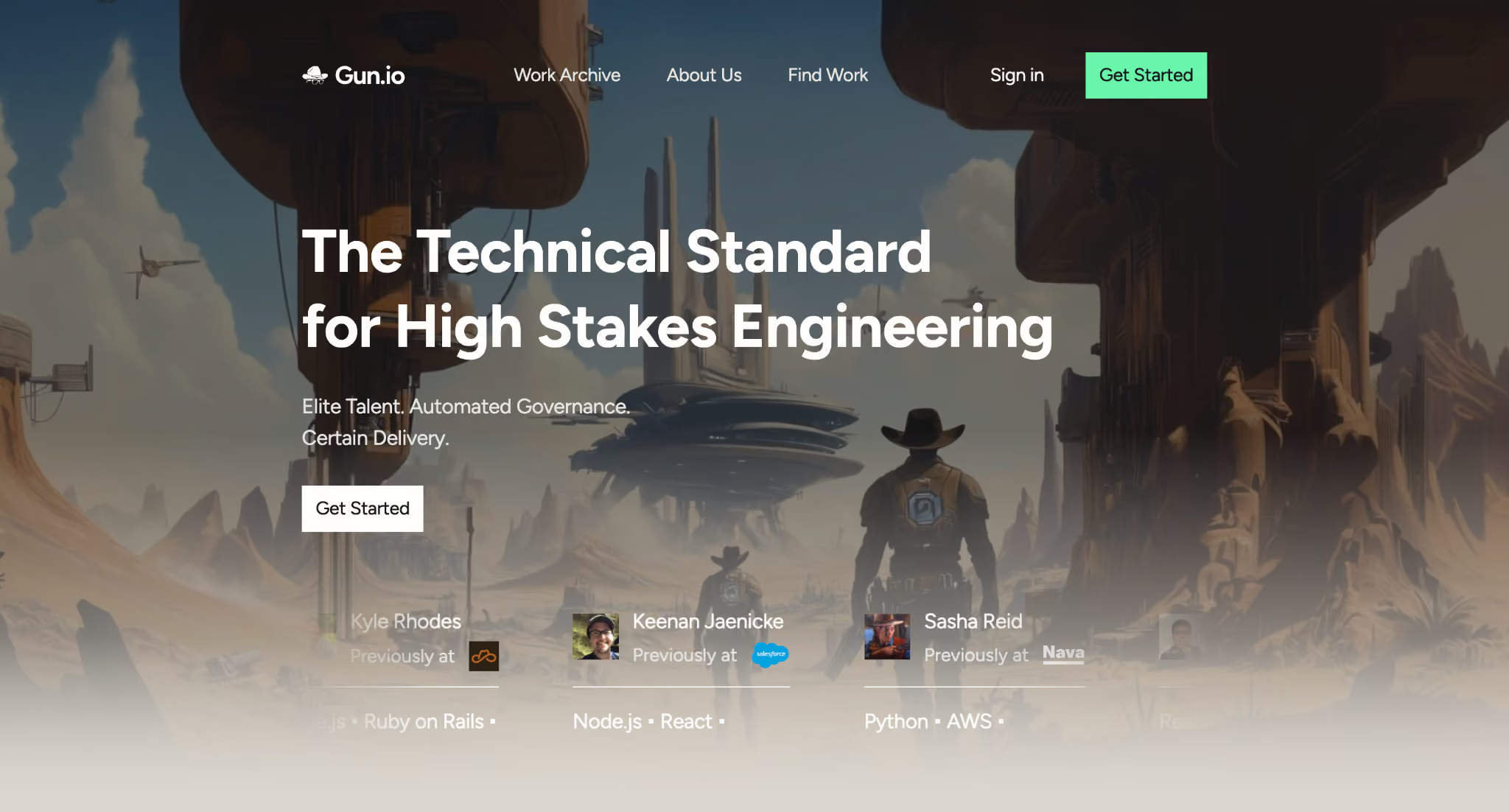
Gun.io screens for a minimum of five years of experience, handles contracts, payroll billing, and tax compliance on the talent side, and shows client rates in full before an engagement starts.
Rates displayed in full is worth borrowing as a buying standard: no upfront deposit, no subscription, and full-time placements charged at 20% of first-year salary.
A premium floor comes with it. The network is built around senior engineers and longer contracts, so short tasks are a poor use of it.
Our verdict: the transparency is the product, and it answers the complaint that drives most platform comparisons. Budget is the gate, since this sits at the top of the market.
#7 Upwork
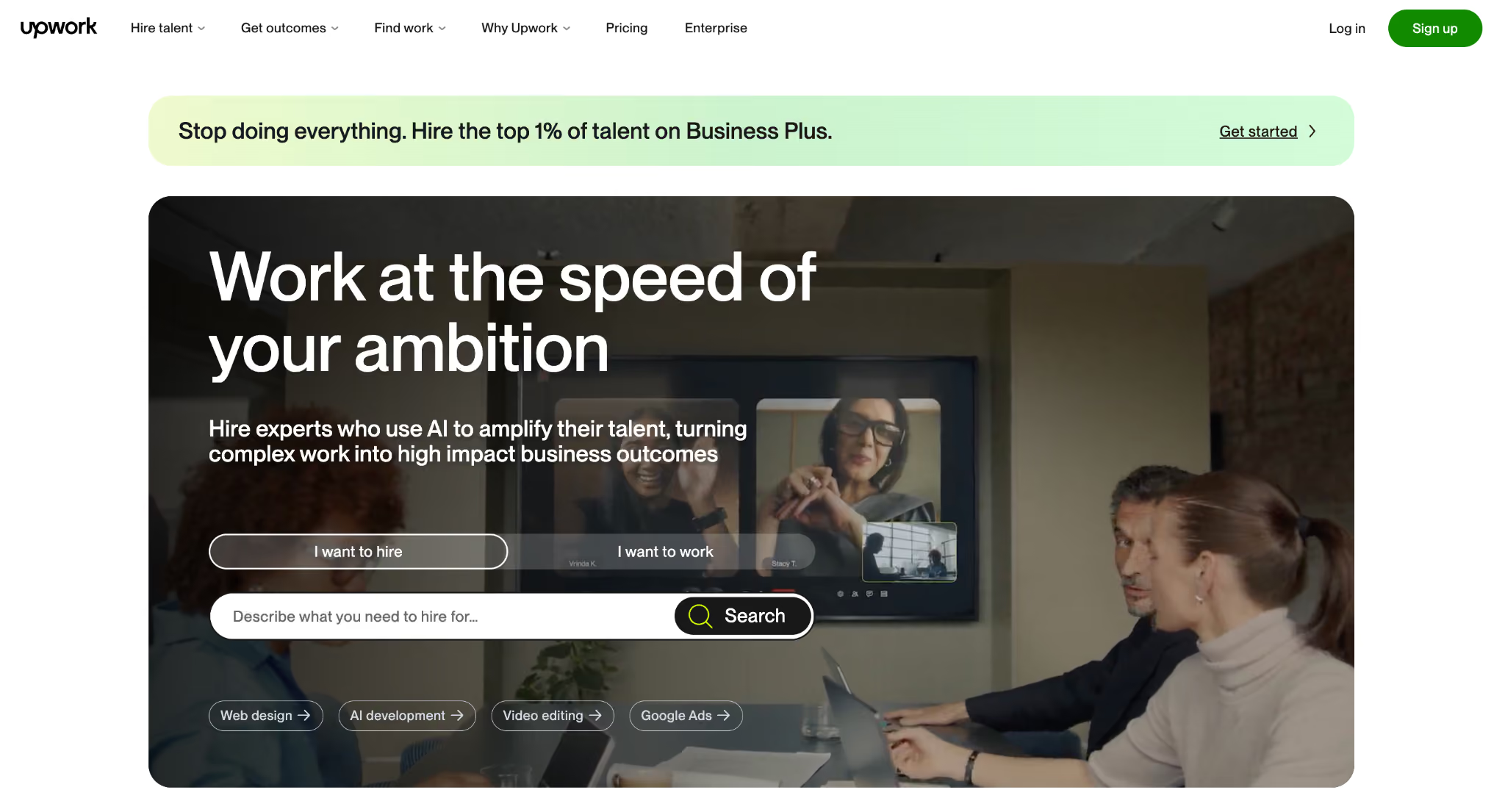
Upwork is the largest open freelance marketplace, where clients post work and run their own screening while the platform supplies contracts, escrow, and payments.
No margin folded into the rate is the structural advantage: the rate you agree is the rate, with a marketplace fee on top. For a buyer who screens well, this is the cheapest competent path here.
No screening layer is the same fact seen from the other side. Every filter is yours to build, which turns hiring time into the real cost, and classification stays entirely with you.
Our verdict: on price this wins outright and deserves naming as the honest floor. What it does not do is the work a vetted network exists to do.
#8 Fiverr

Fiverr organises work as fixed-price deliverables, charging buyers a 5.5% service fee at checkout plus a small fixed order fee on smaller orders, with a vetted Fiverr Pro tier above the open marketplace.
Fixed-price deliverables suit a well-specified build, and for a defined artifact the total is knowable in advance in a way hourly engagements rarely are.
Poorly suited to long-running work is the platform's own boundary. Freelancers pay a flat 20% commission with no volume discount, which pushes rates up on sustained engagements.
Our verdict: for a bounded artifact with a written spec this is efficient and cheap. Sustained product engineering is the wrong shape for it.
#9 DistantJob
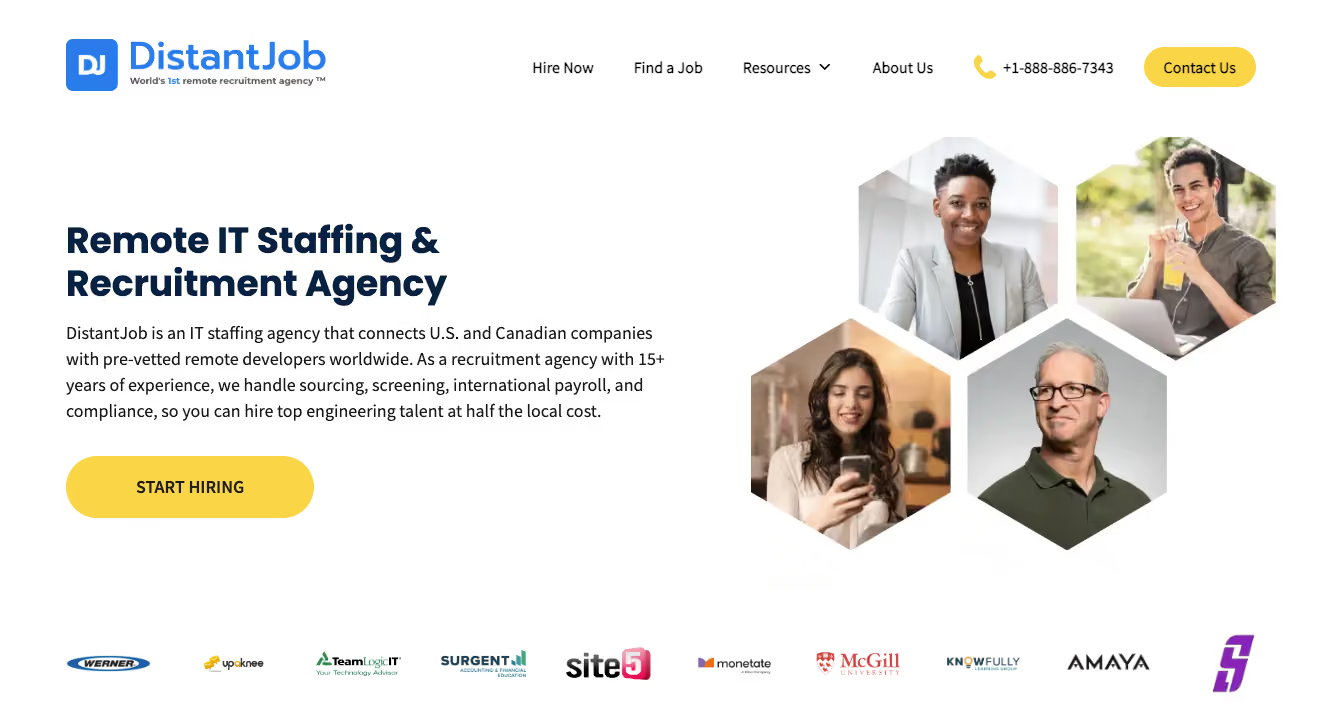
DistantJob is a remote recruitment and staffing agency placing full-time pre-vetted developers from Latin America and Eastern Europe, with payroll, compliance, and ongoing support included.
Full-time placement with support included is the model, and it answers the gap most marketplaces leave: payroll, compliance, and ongoing account support sit with the agency.
Permanent hiring only is the boundary, alongside pricing and replacement terms that are not published, so both are settled in negotiation.
Our verdict: for a single full-time remote hire the structure is sound and the two-region reach is useful. Flexibility of engagement is where it narrows.
#10 Wellfound
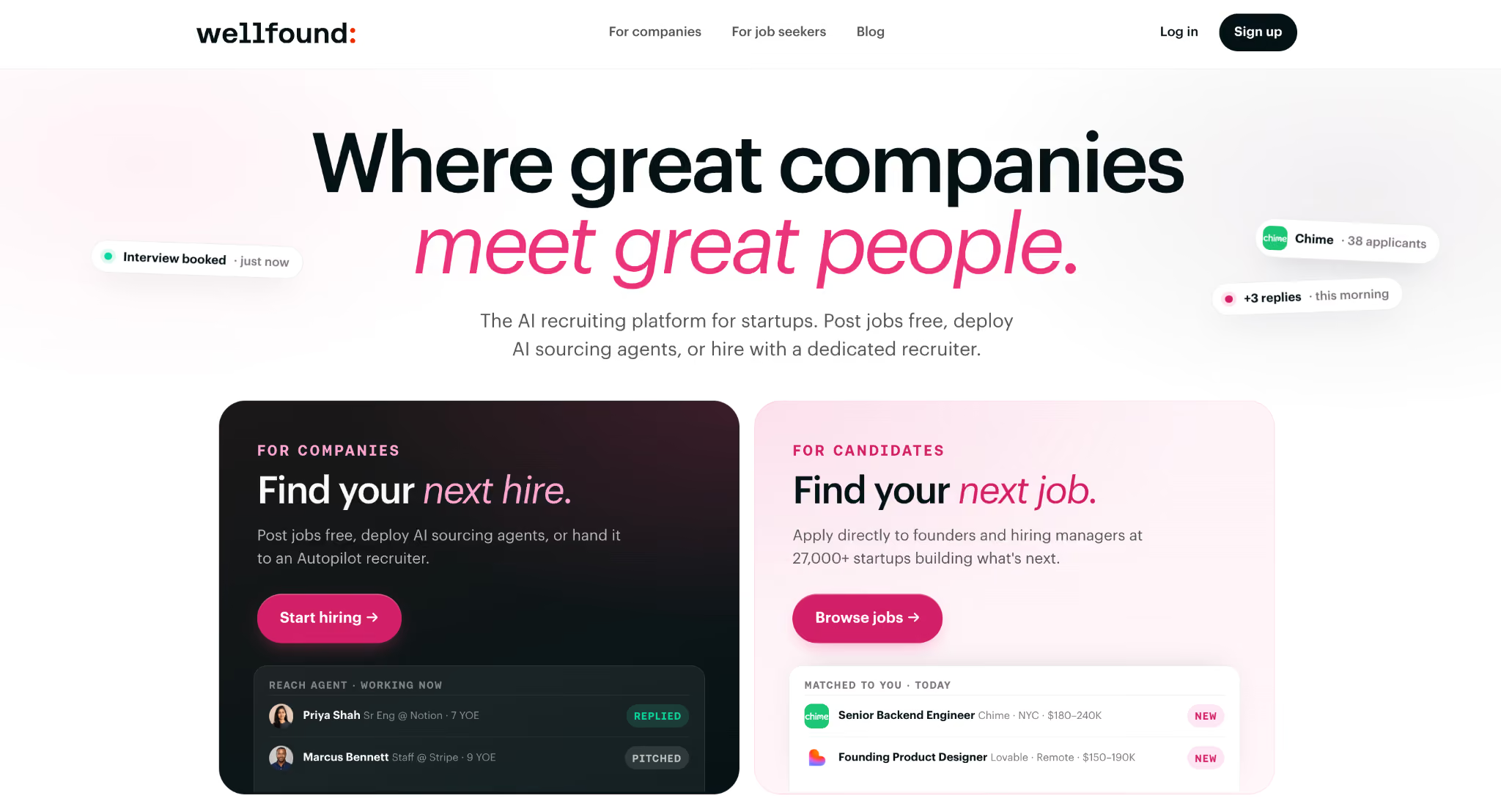
Wellfound combines AI sourcing, applicant review, and a free ATS aimed at startups, with plans from $115 a month and an optional managed sourcing tier.
A startup-weighted pool is the advantage, reaching engineers already looking at early-stage companies, with no per-hire commission on direct sourcing.
Software, not a partner is what the entry tier is. The evaluation work stays in-house unless the managed sourcing tier is added, and that tier is quoted on request.
Our verdict: for a team that can screen well this is efficient and inexpensive. The judgement an engineering hire needs is the part it leaves with you.
#11 We Work Remotely
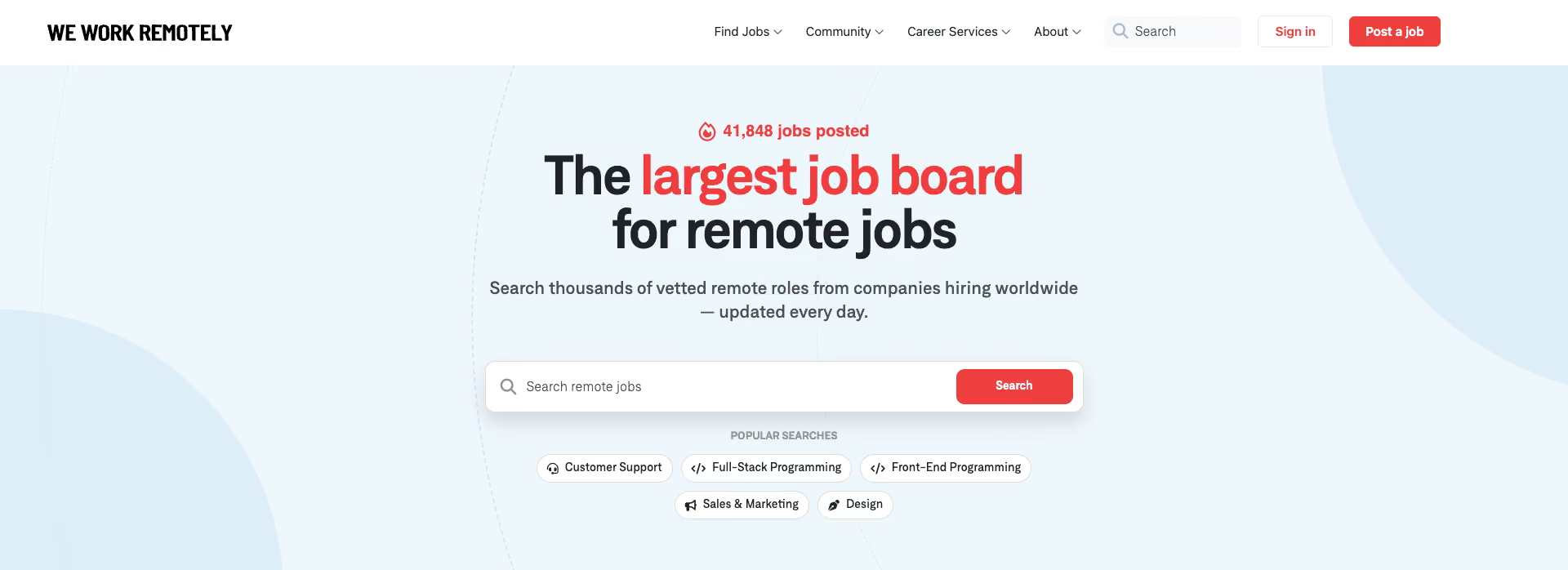
We Work Remotely is a remote-focused job board where companies post roles and hire directly, with no per-hire commission and no vetting layer.
Cheapest reach available is the honest strength: a flat posting fee, no commission on hires, and a large audience of remote-first candidates.
Inbound only is the limit. A job board reaches people who are actively looking, which excludes the senior engineers who are not, and every stage after the application is yours.
Our verdict: for a role that attracts applications on its own, this is the lowest-cost channel on the list. Senior and niche hiring is where inbound stops being enough.
What This Comes Down To
Reach is the cheapest thing on this list and the easiest to buy. Judgement is the expensive part, and employment is the part almost nobody sells at all. Every option here picks one or two of the three and leaves the rest with you.
We Work Remotely and Wellfound sell reach on a flat fee. Upwork and Fiverr add volume. Toptal, Lemon.io, and Gun.io charge a margin for the screening. Across all seven the employment stays on your side: Gun.io administers the paperwork without taking it on.
Tecla has spent more than a decade on the version of this problem where both halves matter: the screening finished before the interview, and the engineer employed under EOR from the first day.
Frequently Asked Questions





%20(1).avif)