
Webflow has become a leading no-code platform, and that's created a new problem. Companies rush to adopt it thinking the "no-code" label means they can skip hiring developers entirely. Then they hit a wall.
No-code doesn't mean no expertise. It means the expertise shifts. Webflow streamlines web creation, but getting real results still requires skilled developers and designers who know how to push the platform beyond its templates. Think of it like handing someone a professional camera. The tool is capable, but the shot quality depends entirely on who's behind the lens.
The question isn't whether you need a Webflow developer. It's whether you want a generic site that looks like every other Webflow template, or something that actually converts and scales with your business.
Here we'll break down what Webflow developers actually do, the skills that separate strong candidates from mediocre ones, and why companies across industries are hiring these experts to compress their design-to-launch timelines in 2026.
What Is a Webflow Developer?
Demand for Webflow developers has doubled in recent years, and it's not hard to see why. Companies are trying to trim development costs and cycles without sacrificing the custom control that makes their sites actually work.
A Webflow front-end developer sits at the intersection of design and code. They understand web design principles, front-end logic and HTML/CSS fundamentals well enough to know when to use Webflow's visual tools and when to write custom code instead. That judgment call is what you're paying for.
Here's what that looks like in practice. Webflow developers:
Design, build and launch responsive sites that work across devices without falling apart on mobile. Customize layouts, animations and interactions beyond what the drag-and-drop interface offers out of the box. Integrate with Webflow CMS and third-party tools so your site actually connects to your existing stack. Collaborate with designers and marketing teams without requiring a translator. Optimize sites for SEO and performance because a beautiful site that nobody finds or that loads slowly doesn't deliver results. Maintain sites post-launch instead of disappearing after the initial build.
Industries that move fast need these skills most. Technology, business and finance companies tend to hire Webflow developers because speed and scalability matter more than having every possible customization option.
Forbes covers Webflow's advantages in detail for business applications.
Get an in-depth overview of Webflow’s advantages on Forbes Business.
Key Skills Every Webflow Developer Should Have
84% of businesses are using no-code platforms to bridge the technical gap caused by the developer shortage. But not all no-code developers are created equal.
Webflow is a hybrid role. Developers need to cover both design and technical ground. Here are the skills that separate candidates who can actually deliver from those who just know how to drag and drop:
Proficiency in Webflow CMS, design interface and dynamic content: This is table stakes. If they don't know the platform inside out, they're learning on your dime.
Responsive design and UX/UI understanding: Sites need to work on a phone, tablet and desktop without requiring three separate builds. They also need to feel intuitive to use. This isn't a nice-to-have.
Custom code embedding (HTML, CSS and JavaScript): Sometimes you need to go beyond what the visual editor offers. Strong candidates know when that moment arrives and how to handle it cleanly.
Experience with integrations (APIs, etc.): Your Webflow site probably needs to talk to your CRM, your email platform, your analytics tools. Sites that exist in isolation don't deliver business value.
SEO optimization and page speed improvements: Beautiful sites that nobody can find or that take six seconds to load are expensive decorations, not business assets.
Experience with Figma and low-code integrations (Zapier, Airtable, Make): Design handoffs need to be smooth. Workflow automation saves hours every week. These tools make that happen.
Beyond hard skills, look for developers comfortable with agile collaboration across IT, design and marketing teams. The best candidates are located in overlapping time zones and understand U.S. workplace culture well enough to integrate smoothly from day one.
Webflow breaks down the difference between web designers and web developers on their site.
Learn about the difference between a web designer vs. web developer on Webflow.
Why Companies Are Hiring Webflow Developers in 2026
The developer shortage isn't getting better. Traditional hiring pipelines take months and often fail. Companies need alternatives that work now, not next quarter.
Webflow's rapid development cycles and cost-efficiency address this directly. No-code platforms are meeting the moment when conventional approaches can't keep up.
Faster Go-to-Market
Webflow compresses development timelines by up to 90%. Developers can customize features without writing everything from scratch. Your time from concept to launch drops from months to weeks, sometimes days.
This supports rapid prototyping, testing and iteration. You can ship, learn and adjust before your competitors finish their requirements doc.
Built-In Tools for Customization
Webflow consolidates tools that usually require five different platforms. The drag-and-drop interface, templates, hosting, CMS and SEO tools all live in one place.
Developers can customize and optimize in detail without stitching together fragmented systems. No more debugging integration issues between your CMS, your hosting provider and your analytics platform.
Lower Development and Maintenance Costs
Shorter cycles mean lower building costs. But the savings compound over time.
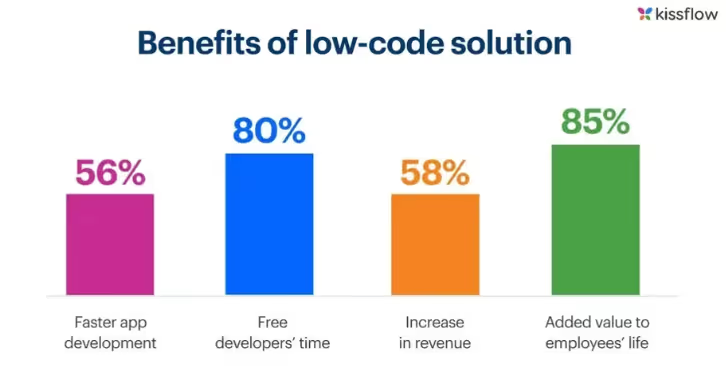
Webflow simplifies ongoing maintenance with in-platform tooling. Your team can make updates without calling in contractors or filing dev tickets. Companies using low-code solutions like Webflow report average revenue boosts of 58%.
Simplified Content Management
Content demands keep climbing. Teams need processes that work across IT, content and marketing without constant bottlenecks.
Webflow streamlines these workflows at up to 10 times the speed of traditional approaches. Your marketing team can update landing pages, publish case studies and test new messaging without waiting for engineering sprints.
That speed matters when campaigns need to launch next week, not next quarter.
Smoother Cross-Team Collaboration
Webflow is built for real-time collaboration. Designers, developers and marketers work on the same canvas simultaneously instead of passing files back and forth.
The platform includes role types like build, design, edit, comment and view. You can set up workflows that match how your team actually operates instead of forcing everyone into rigid handoffs.
Proven Success With Startups and Enterprises
The companies choosing Webflow aren't taking blind gambles on unproven technology. Top brands have measurable results:
Docusign saw 1.170% increase in traffic year-over-year. NCR achieved 10x in annual cost savings. Lattice increased site-wide conversion by 20%. Orangetheory Fitness saved $6M annually. Dropbox decreased dev ticketing by 67%.
Reddit, Soundcloud and Upwork all use Webflow. The platform works at scale.
Discover how the global developer shortage is impacting businesses today on Tecla.
How to Hire the Right Webflow Developer (in LatAm and Beyond)
Hiring Webflow developers sounds straightforward until you start interviewing. Resumes all look similar. Portfolios blend together. Everyone claims to be an expert.
Here's how to find candidates who actually align with your needs instead of just checking boxes on a resume.
1. Define Your Webflow Project Goals
Get specific about what you actually need before you start interviewing anyone. Are you redesigning an existing site or building from scratch? What are your KPIs? Who's your target audience? What features are must-haves versus nice-to-haves?
CMS integration, ecommerce functions and advanced animations all sound important. But which ones actually move your business metrics?
Nail down the logistics too. Set a realistic budget and timeline. Decide if you're hiring one developer or building a small team. These decisions shape who you look for and how you structure the role.
2. Look for Webflow-Certified Developers and Assess Their Portfolios
Webflow certification signals they've done this enough times to pass the test. It's not everything, but it matters.
Look at project portfolios carefully. Pay attention to work in your industry or with customizations similar to what you need. Generic portfolio shots of beautiful landing pages tell you nothing about whether they can handle your specific technical requirements.
Ask questions like: How did they solve X problem? What trade-offs did they make? What would they do differently now?
3. Test for Responsive Design and Attention to Performance
Vetting for responsive design and performance optimization is hard without in-house expertise. You're stuck relying on what candidates say they can do versus what they actually deliver.
Consider having candidates take a Webflow skill assessment through a third-party examiner or partner. Otherwise you're making expensive hiring decisions based on confidence levels and portfolio polish.
4. Prioritize Communication and Design Collaboration Skills
Technical ability matters. Communication ability matters more.
Your Webflow developer needs to explain decisions clearly to stakeholders who don't speak code. They need to understand business priorities well enough to push back when a request doesn't make technical sense. They need to collaborate with your design team without creating friction.
During interviews, ask behavioral questions that reveal how they actually work. How do they handle disagreements with designers? What happens when a stakeholder changes direction mid-project? How do they explain technical constraints to non-technical people?
5. Design Your Hiring and Onboarding Processes With Care
Finding the right candidate is half the battle. Getting them productive quickly is the other half.
Thoughtful onboarding makes the difference between a developer who's contributing in week two versus one who's still figuring out your systems in month three.
Some approaches that work:
Automate hiring admin so you're not drowning in paperwork when you should be integrating your new hire. Create a self-paced online onboarding suite instead of cramming everything into overwhelming week-one marathons. Schedule meet-and-greets with key team members early so relationships start building immediately. Make a 30-60-90-day milestone checklist so expectations are crystal clear from day one. Collect feedback regularly and adjust your process based on what's actually working.
If you need support with seamless hiring and onboarding for Webflow developers, a talent partner like Tecla can help. We've built onboarding processes specifically for LatAm developers working with U.S. companies.
Explore Webflow’s 2026 State of the Website Report for more insights.
The Future of Webflow and No-Code Development Worldwide
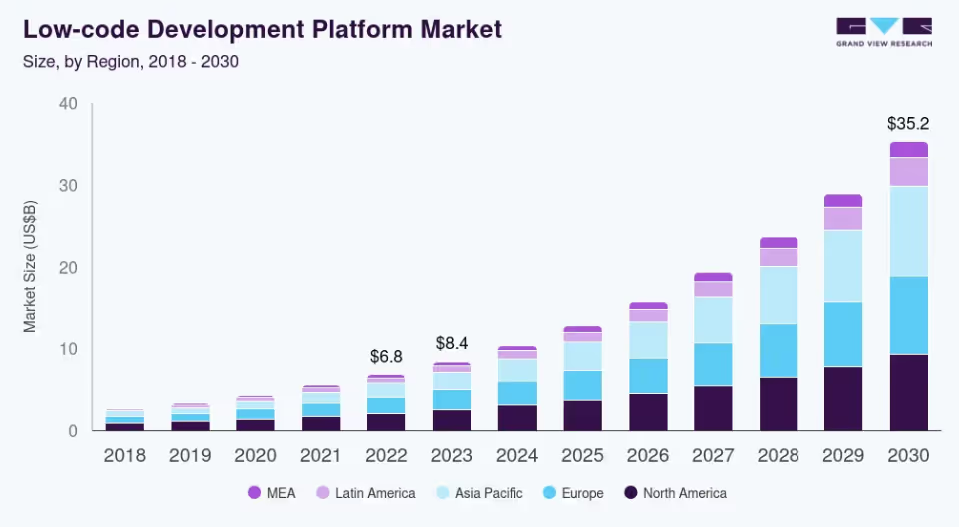
No-code development is expanding fast. Market forecasts suggest it will double by 2030. AI and cloud computing are accelerating this growth as businesses connect their tools more tightly.
The future of Webflow looks strong. We'll likely see AI integration for more automated content and design workflows. Enterprises will adopt no-code tools at higher rates as the developer shortage persists. More "citizen developers" without traditional coding backgrounds will create websites and digital platforms.
Demand for Webflow experts will probably grow, especially hybrid designer-engineers who bridge both worlds. Nearshore developers in Latin America will be particularly valuable because they combine technical skills with real-time collaboration and cost-effective salaries.
That combination of skill, timezone alignment and cost is hard to replicate elsewhere.
Learn more about Tecla's Webflow talent pool here. Explore emerging technologies in software development on Tecla.
Hire Webflow Developers Who Fit Your KPIs With Tecla
Webflow has changed how businesses approach website development. The platform makes building fast and flexible. But the tool alone doesn't guarantee results.
The difference shows up in who's using it. A skilled Webflow developer helps you move faster, build better and avoid the expensive mistakes that come from treating no-code like it requires no expertise.
At Tecla, we connect companies with vetted nearshore Webflow developers who deliver quality work in your time zone. No guesswork, no surprises, no three-month hiring cycles. Reach out to our talent specialists today.
FAQs


.png)
%20(1).avif)
.avif)
.avif)