%20(1)%20(1)%20(1).avif)
53% of businesses are now using AI automation in talent acquisition to some extent. From resume screening and candidate outreach to interview scheduling and predictive analytics, AI-driven tools can help recruiters make smarter hiring decisions with fewer resources.
While automation has prime advantages for talent acquisition, connecting with top candidates requires a deft human touch. That’s why it’s important to understand the best use cases for AI in talent acquisition, including what should and shouldn’t be automated, so your company can strike the right balance between technological efficiency and human judgment.
What Is Automation in Talent Acquisition?
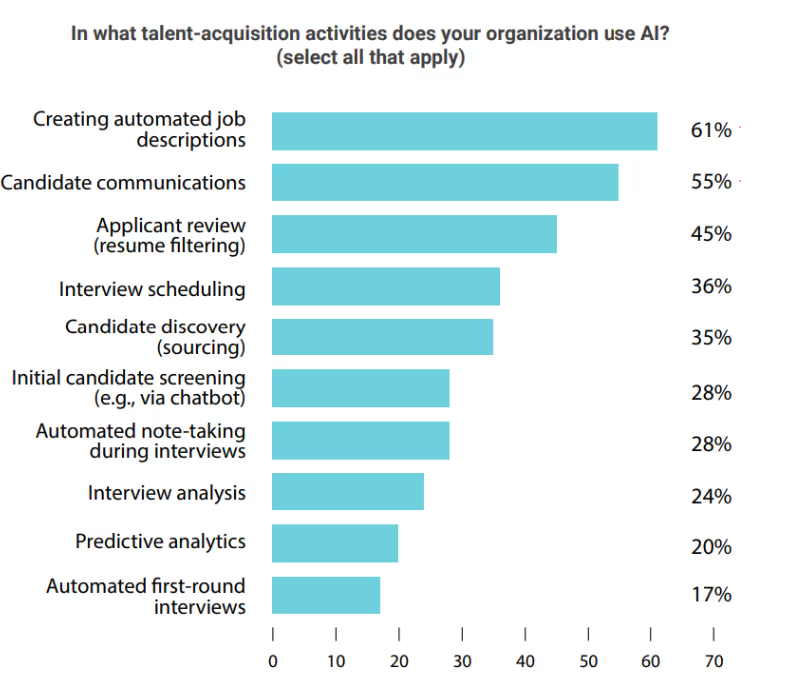
The #1 talent acquisition trend in 2025 is AI usage, according to a study by Korn Ferry. A vast majority of HR managers (84%) are currently planning on using automation for their recruitment initiatives.
Automation in talent acquisition is typically defined as the use of AI, machine learning and process automation to source, screen and engage with job candidates.
The main benefit is to reduce manual efforts and speed up recruitment cycles, so that TA managers can focus on personalized relationship-building. Advocates of HR automation also mention its potential to reduce bias and capture a larger volume of candidates.
Most commonly, AI recruiting tools handle tasks such as:
- Writing tailored job descriptions to attract candidates
- Automating candidate outreach (e.g. emails, branded materials, etc.)
- Screening applications and shortlisting the best candidates
- Scheduling interviews and reducing admin
- Discovering candidates on relevant platforms and social channels
- Handling initial candidates screening (via chatbot or first-round AI interview)
- Note-taking and/or analyzing interviews
- Using predictive analysis to rank candidate success scores
- Assessing skills via generated tests or challenges
ATS Automation vs. AI Hiring Tools
Recruiters have long taken advantage of technologies to streamline their administrative burdens. ATSs (Applicant Tracking Systems) lighten the load by helping HR manage screening, outreach, assessment, etc.
Yet, AI-powered hiring stacks go the extra mile beyond management. ML-backed automation directly handles these tasks, limiting the need for HR oversight. For example:
- Screening: AI uses natural language processing to look beyond keywords and understand contextual information, so TA managers can screen resumes with greater accuracy and efficiency.
- Outreach: TA managers can create an automated pipeline of personalized emails that reach candidates without any intervention.
- Assessment: HR professionals can glean candidate information and generate relevant tests using AI.
- Forecasting: AI can enable predictive hiring analytics that help you determine candidate success scores in advance.
With these gains, TA managers get significant cost savings, as well as enable scalability in their recruitment pipeline.
Learn about IBM’s AI and talent acquisition strategies in their guide.
How Automation Is Used Across the Recruitment Funnel
Automation has a wide spectrum of applications throughout the recruitment cycle. As your TA team looks for efficiency opportunities, consider the following areas in your funnel.
- Employer brand marketing: Use AI to set up ongoing social campaigns to showcase your employer value proposition. Set up recruitment marketing via web, email and SMS. Create job descriptions and referral programs that attract your ideal candidate profiles.
- Sourcing: AI can speed up candidate sourcing by automating discovery through profile matching. It’s also helpful for nurturing passive candidates through AI-powered email pipelines, social posts and more.
- Screening: Filter resumes that match with job requirements using AI, plus run predictive analysis for candidate success scores.
- Interviewing: Set up automated scheduling, interview note-taking, first-round video interviews and more.
- Assessing: Create tailored skills assessments and run background checks using an automated hiring process.
- Onboarding: Transfer knowledge and connect new hires through automated HR workflows and self-service tools such as chatbots.
Case Studies of AI Talent Acquisition: U.S. and Globally
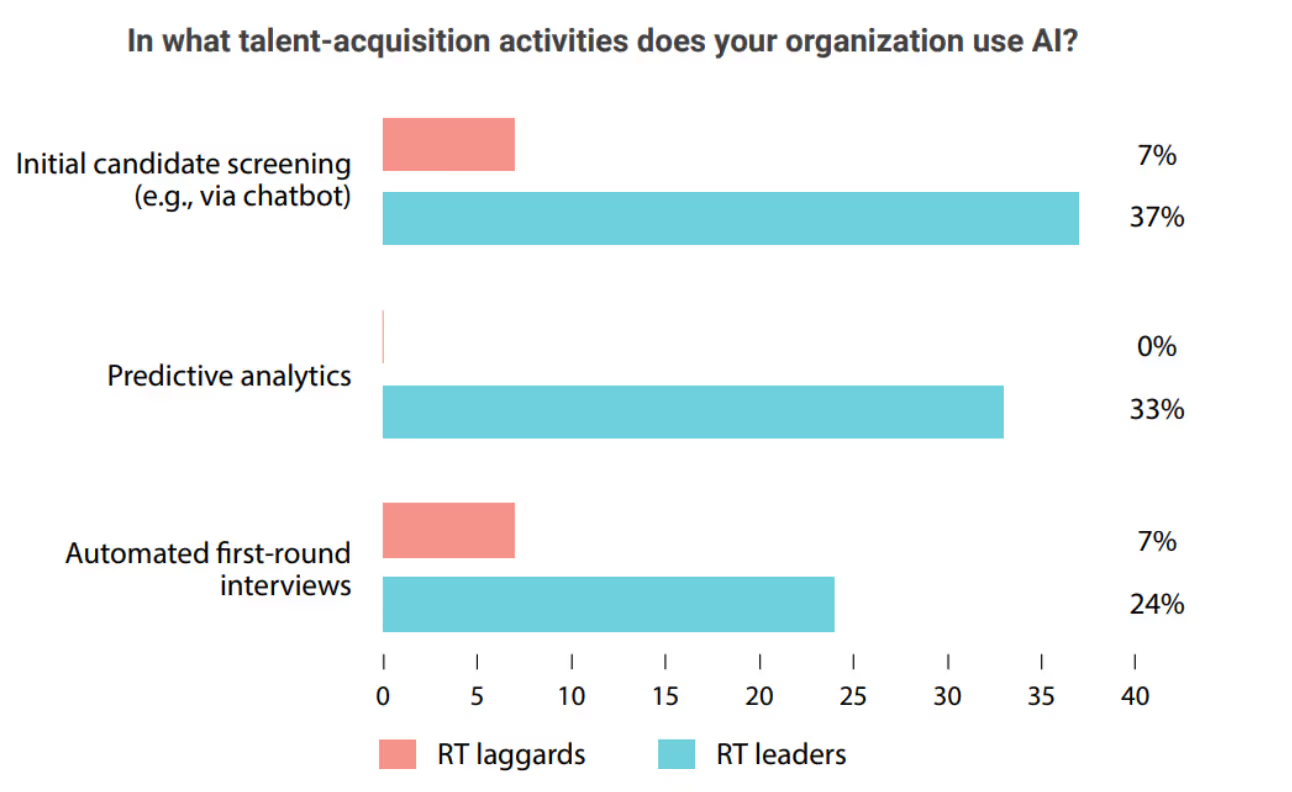
Leaders in talent acquisition are especially keen on using AI for candidate screening automation (37%), predictive analysis (33%) and automated first-round interviews (24%). That said, every company will have its own priorities for using HR automation.
Today’s top brands are leading the charge with automation in talent acquisition. Check out these recent success stories with AI:
- IBM: Lowered recruitment costs by 30% and early new hire turnover by 25% with their Watson Recruitment platform.
- Foundever: Reached a 95% candidate satisfaction rating from over 200,000 applicants in just six months.
- Anonymous automotive company: Attained $2 million in savings within the first 12 months of using AI-powered interview scheduling.
- Anonymous U.S. resort operator: Boosted scheduled interviews by 423% and reduced candidate drop-off by 85% within the first year.
See Forbes’ AI recruitment report for more details.
Key Benefits of Automation in Talent Acquisition
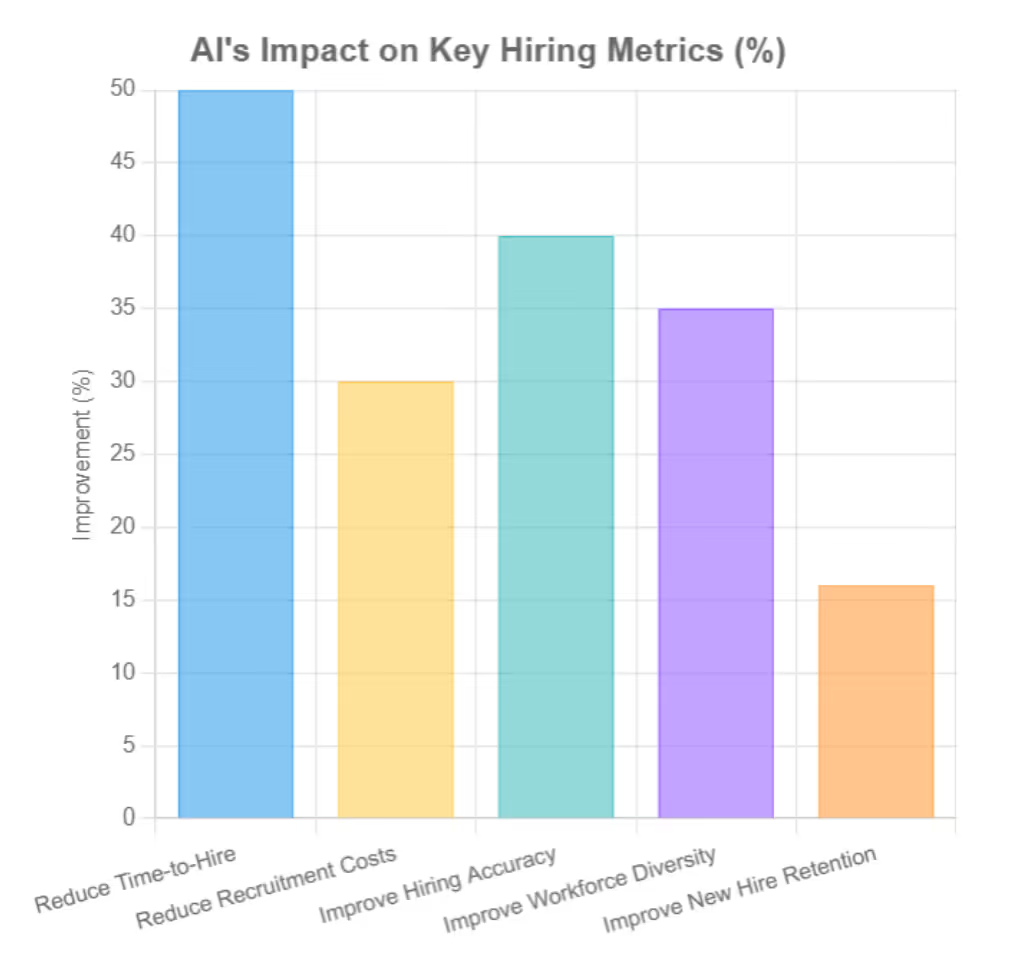
Automation in talent acquisition has across-the-board benefits for companies eager to improve hiring outcomes and resource allocation. Here are some of the advantages we’ve seen firsthand at Tecla when matching clients with best-fit IT professionals.
Reduced Time-to-Hire
86% of TA managers say AI speeds up the hiring process. Its capabilities to discover, screen and assess candidates means shorter, more effective recruitment cycles.
Improved Quality of Hires
74% of HR managers report that AI improves the quality of hires. Overall, features such as candidate screening automation and focusing on skills over credentials can help recruiters cast a wider net and pinpoint a just-right candidate.
Enhanced Candidate Experience and Retention
Automating personalized candidate outreach, improving responsiveness and enabling self-service tools can support stronger candidate experiences. At the same time, with a reduced admin load, TA managers can focus efforts on relationship-building and retention initiatives.
Bias Reduction
Having an AI-supported evaluation process means following the data instead of any implicit bias. Studies suggest using recruitment automation software can reduce bias and support more diverse hiring.
Cost Savings
AI in recruitment can lead to 30% cost savings, allowing for higher recruitment ROI. As a result, TA managers can better allocate resources for more efficient hiring.
Get an in-depth report about the talent acquisition revolution from Josh Bersin.
Limitations and Risks of Automation in Talent Acquisition
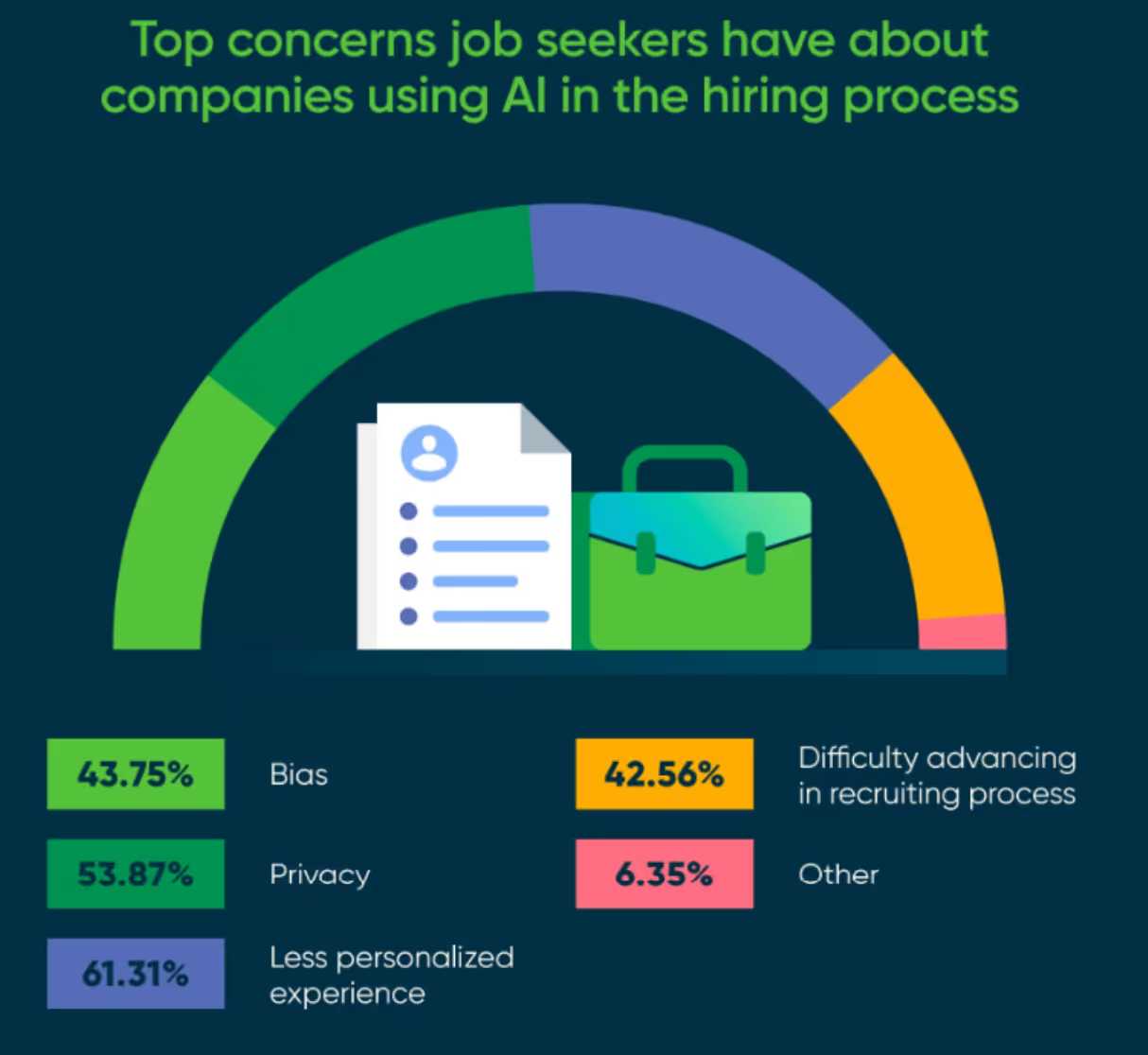
Using automation in talent acquisition has unquestionable benefits, but should be implemented with human care and oversight. After all, 67% of job seekers are wary about brands using AI in recruitment.
Here are some key automation-related factors that HR managers should thoughtfully consider as part of their talent acquisition strategy.
Loss of Personal Touch in Candidate Communication
56% of TA managers worry that AI could erode personalization in the recruitment process. Too much HR automation could turn off job seekers and hinder making connections during the nurturing stage — even stopping candidates from applying in the first place. For example, 84% of job seekers said they would prefer to have an in-person interview than an AI-run interview.
Risk of Algorithmic Bias
Businesses are also worried that AI could make their recruitment vulnerable to bias and/or discriminatory practices. 88% also mention that highly skilled candidates could be filtered out by AI. Depending on how the AI models are constructed, human biases could be replicated or overlook qualified candidates who fall somewhat outside the parameters.
Need for Ethical Data Handling and Transparency
Job seekers are on their guard about their personal data being used in AI recruitment. 90% of candidates say they want companies to be transparent about using AI in recruiting, so they can understand how their data is processed and protected.
Ultimately, it’s essential to find the right balance between AI and human in your automated recruitment processes. Too much AI and you may risk a lack of personal connections, too little and you won’t see efficiency gains.
At Tecla, we leverage human-in-the-loop recruitment solutions that are supported by AI-driven technology but managed by expert specialists. We enhance, not replace, recruiter judgment to get your business the best possible talent outcomes.
What’s more, we recruit our top engineers entirely from LatAm, enabling extra cost savings for clients. The focus on skills-based hiring and AI automation is especially aligned with our mission to rapidly match clients with world-class remote developers.
Read Korn Ferry’s full report on AI in Talent Acquisition: Top Challenges for 2025.
The Future of Automated Talent Acquisition: Tecla Predictions
“AI has the potential to transform recruitment for the better, making processes faster, fairer and more data-driven. But the best results come when technology enhances, rather than replaces.” -Horton International
Automation in talent acquisition is paving the way for smarter and more effective hiring, with 53% of HR managers anticipating that AI usage will amplify in coming years. Let’s go over key HR tech trends worth keeping in mind as you create your ideal automated talent pipeline.
Generative AI for Job Descriptions and Communications
Writing job descriptions is AI’s #1 use by TA managers today. This trend is sure to pick up as teams look to fully automate their candidate communications and brand materials to save resources.
Skills-Based Hiring
Shortlisting candidates based on their skills, instead of formal degrees, certifications or credentials, can be a more effective approach for tech talent. This is especially true because 69% of developers have self-taught skills that may otherwise be overlooked — including top-notch developers in regions such as LatAm.
Predictive Hiring Analytics for Performance and Retention
AI will be able to crunch the numbers of relevant hiring factors to determine candidate success scores. You can use this predictive hiring analytics data as a guideline to prioritize candidates likely to perform well and stay at your company.
Integrations With HR Platforms
The connection between your HR platforms and AI features will become more cohesive as integrations improve and expand, ensuring well-synced tooling and workflows.
Explore how businesses are integrating AI into their workforces beyond TA.
Accelerate Your Automated TA Cycles with Tecla
The most successful companies aren’t replacing TA managers; they’re empowering them with AI recruiting tools that eliminate manual work and surface better candidates faster.
Through strategic automation in talent acquisition, you can speed up hiring, improve outcomes and save costs. Plus, your recruiters will have more time to nurture relationships with top candidates.
At Tecla, we help global companies assemble high-performing remote teams by combining human connection with AI in hiring strategies. Contact Tecla to rapidly recruit nearshore tech teams using leading human-in-the-loop processes.


.png)
%20(1).avif)
.avif)
.avif)