%20(1)%20(1)%20(1).avif)
AI, big data, cybersecurity, the cloud… As tech innovation continues to accelerate, companies are struggling to find the talent to keep pace. The IDC estimates that 90% of organizations worldwide will be affected by the software engineer shortage by next year.
Here we’ll analyze the global tech talent shortage: what’s causing it, how it impacts business growth, and the most effective strategies companies are using in 2025 to close the gap.
Plus, we’ll explore how the IT skills gap is expected to intensify in coming years, signaling the need for businesses to rethink their hiring models in the long term, including collaborating with nearshore talent partners like Tecla.
What’s Causing the Global Tech Talent Shortage?
Although today’s tech talent shortage is constantly evolving, the scope of the gap includes these key numbers:
- The U.S. will reach a software engineer shortage of 1.2+ million by 2026.
- The cybersecurity industry is currently experiencing a gap of four million professionals.
- The world will face a 85 million skilled workers shortage by 2030, which predominantly impacts tech-related roles.
Main Causes of the Tech Talent Shortage Worldwide
Why exactly has the IT skills gap widened recently? Let’s explore some of the main reasons behind the growing shortage, so you know how to overcome the developer hiring crisis.
Rapid Digital Transformation Post-2020
If your mind jumps straight to AI, you’re not wrong. New strides in technologies have upped the demand for remote tech talent, with AI becoming the world’s most in-demand skill in 2025. Overall, AI, big data, cybersecurity, and the cloud are considered the “big four” tech trends driving up demand.
AI and Cloud Adoption Outpacing Education Systems
Given the fast pace of technological change, newly graduated engineers and the courses that train them haven’t yet caught up to AI development trends. Traditional educational programs are often slow to update their curriculums and today tech skills become outdated in just 2.5 years, requiring more modern reskilling developer initiatives.
Geographic Concentration of Talent in Major Tech Hubs
Global hiring challenges in tech don’t impact regions equally. Major tech hubs such as San Francisco, Toronto, London, Paris, Beijing, Singapore, and Tokyo are overflowing with top talent. Companies located beyond these hotspots may be limited by local availability and feel the talent squeeze more keenly.
Competition From Startups and Global Enterprises
In this fiercely competitive talent landscape, startups and global enterprises with larger budgets hold the upper hand. Retention for tech workers is one of the lowest, as businesses try to poach the best engineers.
The Developer Hiring Crisis in the U.S.
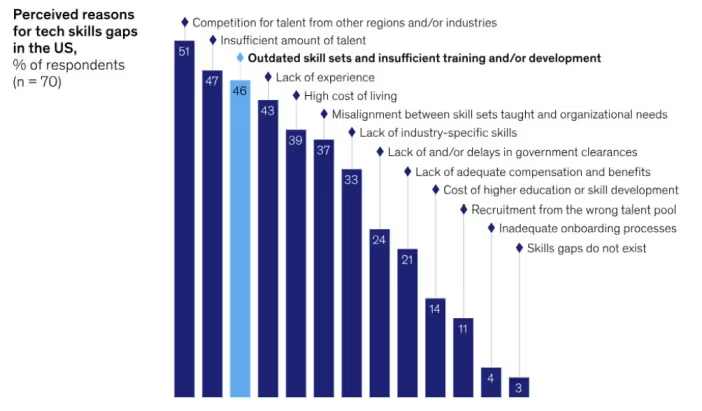
The tech talent shortage is especially sharp in the U.S., where the demand for engineers is forecasted to reach 7.1 million tech jobs by 2034.
Without finding qualified developers to meet this gap, the U.S. is predicted to miss out on $162 billion revenue. Competition for talent isn’t the only factor at play. 46% of American businesses also report that job candidates have outdated skill sets in dire need of training.
Check out the full 2025 Global Talent Shortage Report from ManpowerGroup.
Business Impacts of the Tech Talent Shortage
“The shortage of tech talent could result in $5.5 trillion in losses caused by product delays, impaired competitiveness, and loss of business.” (IDC)
Global hiring challenges are already affecting businesses, with 90% reporting difficulties with recruiting and retaining tech talent. Additionally, the ripple effect of the software engineer shortage reaches business-critical areas, such as the following.
- Delayed product releases and loss of business: Without full teams to carry out their initiatives, businesses fall behind on their product timelines and miss out on revenue opportunities.
- Burnout and attrition of overworked teams: Teams striving to keep up find themselves burdened by extra work, causing burnout and even higher turnover.
- Increased hiring costs and time-to-fill: Capturing top talent ends up becoming more costly, as jobs posting are left open longer and competition elevates pricing.
- Competitive disadvantage for smaller firms: Smaller-sized businesses with lower operating budgets are priced out of local talent and left in the lurch.
- Stifled innovation and growth: 60% of businesses name the IT skills gap as the #1 barrier to digital transformation. The lack of in-demand skills means companies don’t have the manpower to ramp up innovative new projects.
As a result of these impacts, the IDC estimates that businesses worldwide could experience a whopping $5.5 trillion in losses.
Read Deloitte’s in-depth report on the impacts of the IT skills gap.
The Most In-Demand Tech Skills in 2025: AI Takes #1 Spot
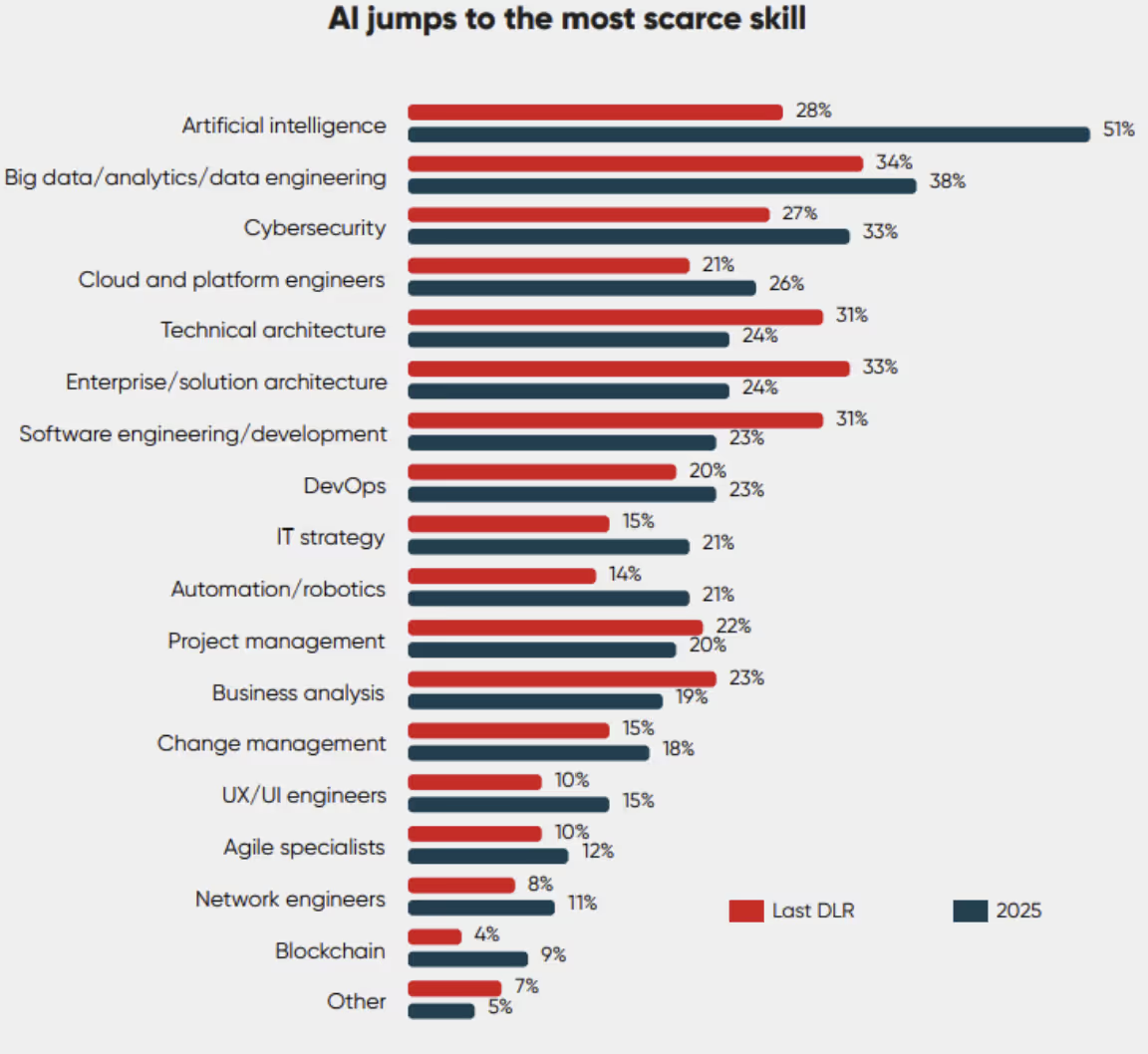
The tech talent shortage is especially challenging for businesses seeking to hire software developers in next-generation technologies and strategy roles.
AI/ML Specialists
AI is the fast-growing skill in 16+ years, according to Nash Squared, with the demand nearly doubling between 2024 (28%) and 2025 (51%). In the U.S. alone, job postings mentioning AI spiked by 1,800%. The shortage of AI skills is affecting almost every industry as well, with an average 51% of business leaders reporting deficits.
Hire top-tier AI developers with business vision at Tecla.
Big Data Engineers
Big data and data engineering is another area in high demand, with 38% of businesses reporting a data talent shortage. The focus on data-driven decision-making and data-hungry tools such as AI and the cloud, make data engineers highly coveted.
Cybersecurity Experts
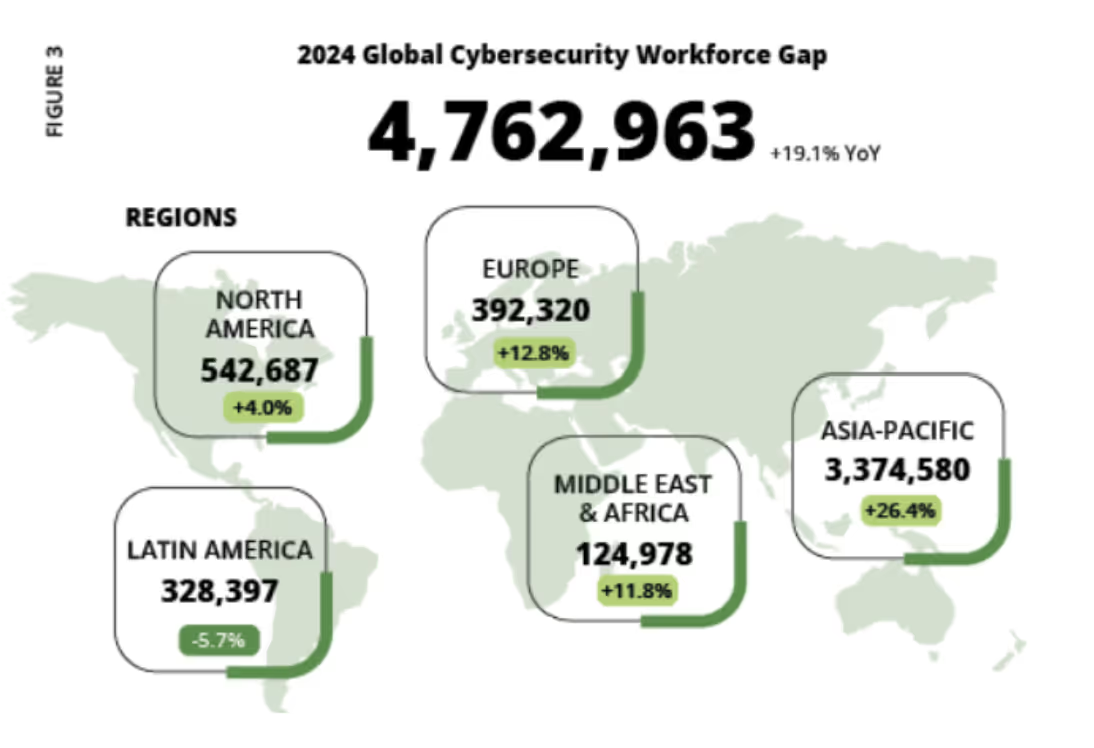
Cybersecurity is listed as the #1 sought-after expertise by the ManpowerGroup, with 46% of businesses reporting skill shortages. Experts suggest the global cyber gap is close to five million engineers.
What’s more, the lack of cybersecurity specialists is high stakes, as companies without safeguards may be at risk for data breaches or cyberattacks. 58% of business leaders worry that the cybersecurity talent shortage puts their organizations at a “significant risk.”
Cloud and DevOps Engineers
The cloud is another top 4 skill set in high demand, with 34% of tech leaders keen to attain cloud computing talent for their teams. It’s vital for undertaking digital transformation and multi-cloud deployments, which 98% of enterprises are utilizing today.
Full-Stack and Mobile Developers
Businesses continue to seek full-stack developers due to their versatility and cost-effectiveness. The market for full-stack services is predicted to expand by 25% yearly, making these professionals a top priority.
Learn more about the surge in demand for AI jobs from PwC.
Strategies to Overcome the Tech Talent Shortage
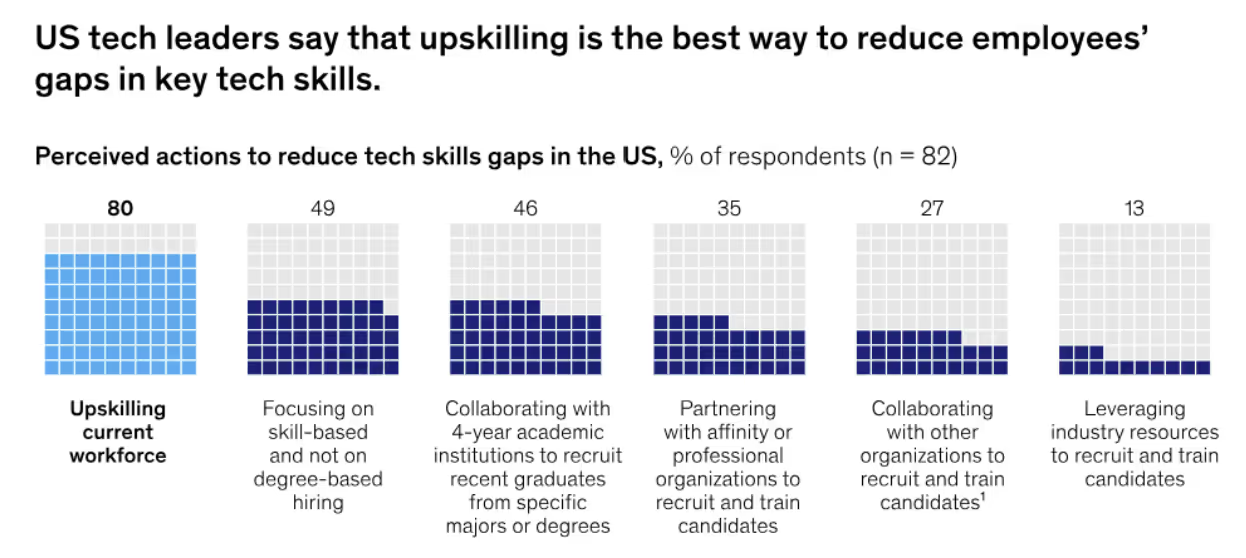
As the tech talent shortage becomes more acute, companies are taking action to bridge the IT skills gap. Here are some actionable ways businesses are covering their needs and hiring AI developers and more.
Nearshore Hiring in LatAm
Nearshore hiring in LatAm has spiked 286% in recent years, giving businesses access to high-quality developers in diverse fields at cost-effective rates. Plus, these regions have invested significantly in STEM education and government-backed coding programs.
As a result, LatAm has one of the highest engineering graduation rates, as well as cultural and English fluency to integrate well with U.S.-based clients. It’s well-worth considering hiring nearshore software engineers for full, specialized teams.
Upskilling and Reskilling Developers
45% of tech workers today say they haven’t received any training in the last six months. In light of the software engineer shortage, 80% of businesses are seeking to upskill their current engineers to meet their skills deficit, especially for new technologies such as AI and the cloud.
Leveraging AI and Automation in Hiring
Businesses can also avoid cumbersome recruitment processes by leveraging AI for some of their sourcing and screening tasks. Using automation in the recruitment process can be helpful, especially for creating job posts, screening resumes and communicating with candidates. In fact, 84% of HR professionals plan to use AI and automation in hiring.
Get an expert guide into AI for tech talent recruitment on Tecla.
Blending Hiring Models

Companies are also using a flexible, multi-pronged approach to hiring to meet their needs. Using a combination of full-time, contract and augmented staff can give you both the reliability of full teams and the specialization of in-demand roles.
Skills-Based Hiring
64% of companies today are using skills-based hiring strategies. Instead of seeking traditional profiles with CS degrees, seek out candidates who demonstrate skill proficiency, whether through a certification, course, or portfolio.
Working closely with a talent partner can help you discover these types of hidden-gem engineers. What’s more, the World Economic Forum suggests that this strategy “works for jobs that don’t exist yet", making businesses more agile in the long term.
For example, at Tecla we pre-vet the skills of nearshore software engineers in our network so that they’re ready to integrate quickly with global teams. Learn more about our company’s rigorous screening process.
Check out the World Economic Forum’s The Future of Jobs Report 2025 for more tech-related trends.
Future Global Tech Workforce Trends: Tecla Predictions
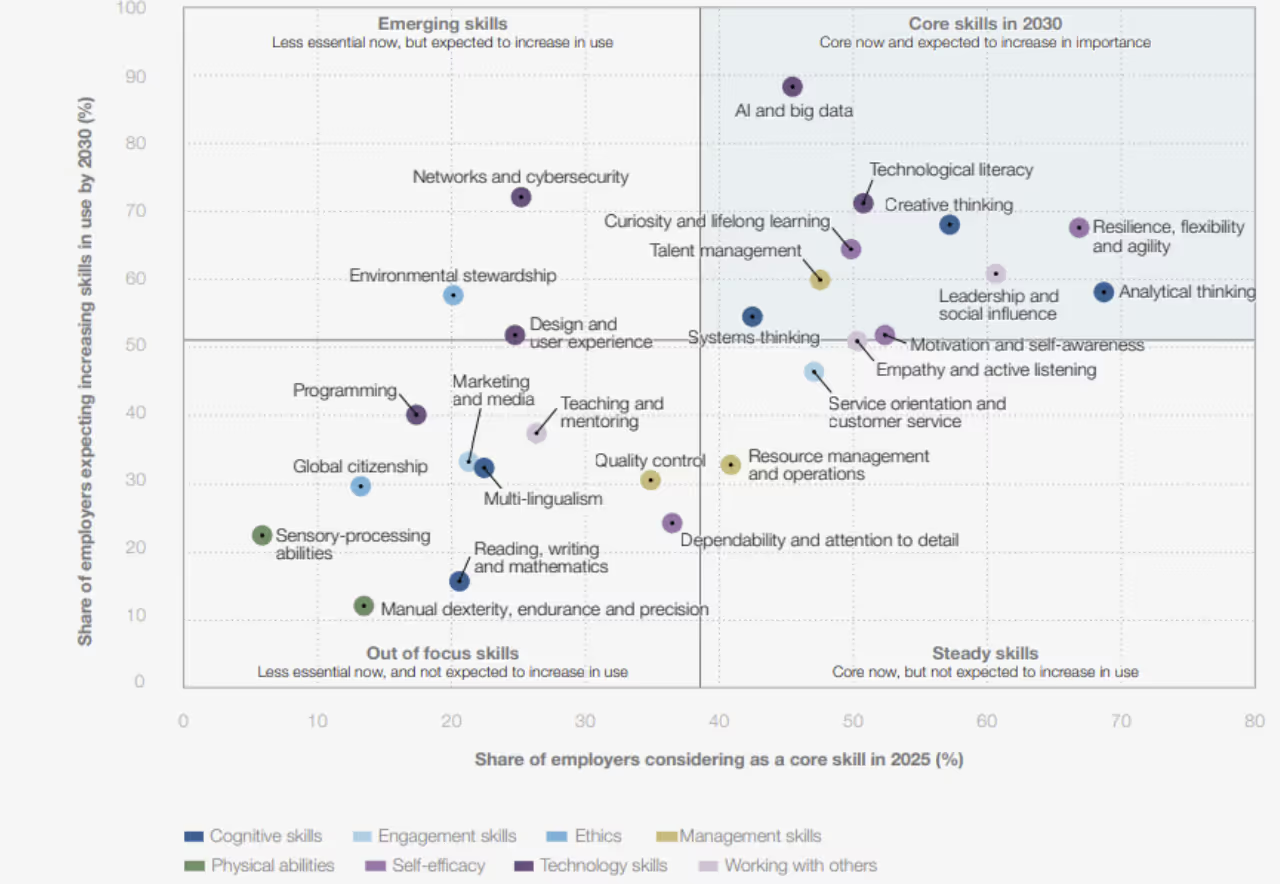
The tech talent landscape is constantly evolving. By 2030, IT professionals can expect 39% of their current skill sets will be outdated. The technologies driving notable changes, such as AI and the cloud, will certainly take on greater importance, as will:
- Globally distributed workforce: Businesses will continue to look beyond borders for specialized engineers unavailable locally.
- AI-enhanced recruitment: Recruiters are already incorporating automation into their hiring cycles, but this is likely to become a mainstream HR approach.
- Peak cybersecurity demands: Cybersecurity is a top priority for companies adopting large-scale cloud-based tooling. As the developer hiring crisis continues, cyber talent will become a leading skill set.
- Focus on green tech: Technology skills coupled with an approach of environmental stewardship will be a must-have as sustainability takes the spotlight.
Given these upcoming global tech workforce trends and others that are sure to surprise us down the road, it’s time to rethink your company’s talent strategy. Going nearshore is one effective method for capturing new technology expertise, while also keeping your hiring budget in check.
Take the pulse on future predictions in McKinsey’s Technology Trends Outlook 2025.
Overcome Tech Talent Shortages With Our Expert-Led Solutions
Although the IT skills gap will deepen in coming years, your business can future-proof your teams by rethinking your recruitment strategy. By leveraging nearshore ecosystems and skill-based hiring, you can create a resilient pipeline of talent to stay ahead.
At Tecla, we connect leading companies with vetted nearshore software engineers across LatAm, helping you hire faster, scale smarter, and overcome the remote tech talent shortage with innovative, tailored solutions. Reach out to discuss your tech talent challenges today.


.png)
%20(1).avif)
.avif)
.avif)